AI agents independently created social norms without human participation
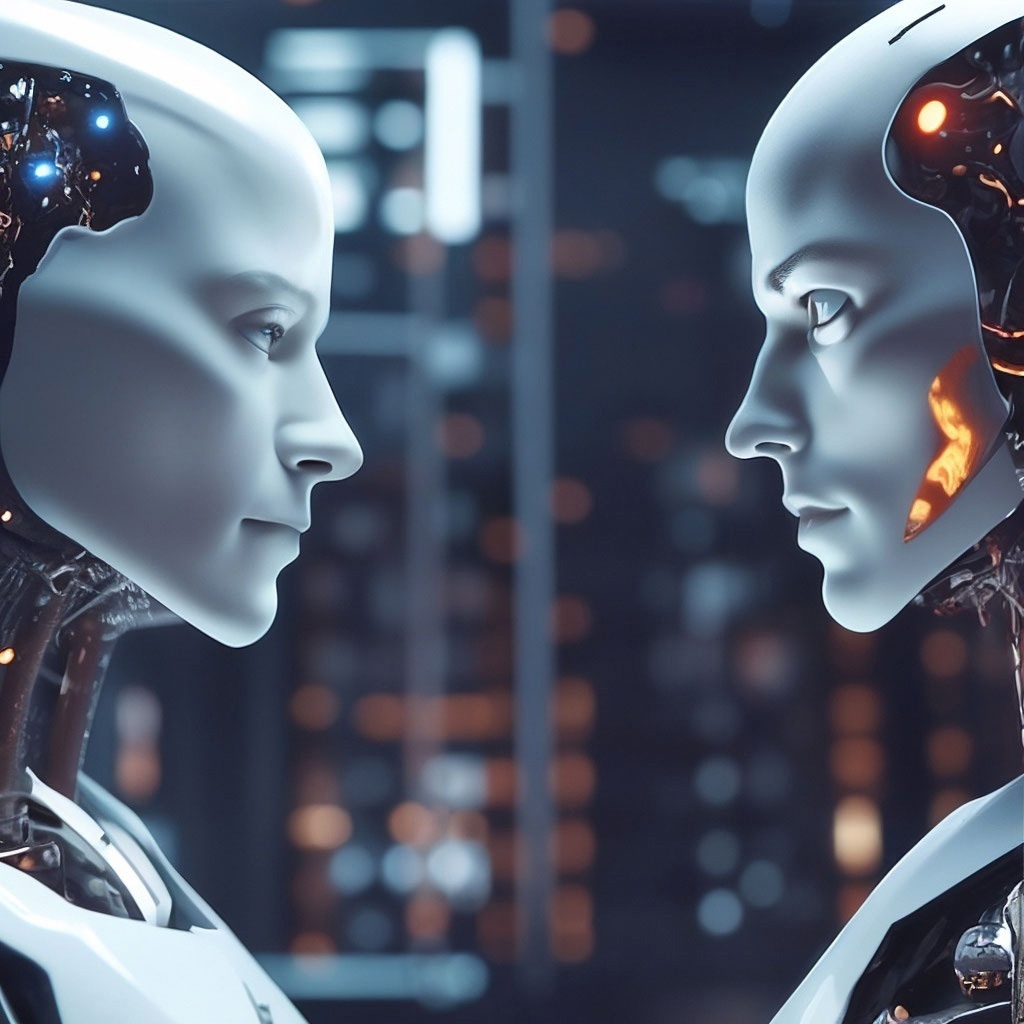
We are used to thinking that rules and norms are a purely human invention. But new research by scientists from City St George’s, University of London and IT University of Copenhagen shows the unexpected. Their research showed that large language models, similar to ChatGPT, are capable of independently forming social norms and linguistic agreements, as well as changing them under the influence of a “minority” – all without human participation.
Researchers asked themselves a question. Will groups of artificial intelligence be able to create new forms of communication, as people do? For the experiment they united from 24 to 200 AI agents that interacted with each other under special conditions. Not knowing about the existence of the entire group, with limited memory of past contacts and without human instructions.
The models were offered to choose a “name” from a limited set of symbols. For matching with a partner they received a reward, for mismatch – punishment. After hundreds of such interactions, stable linguistic norms arose in groups, analogous to human cultural patterns.
The most interesting discovery – the appearance of collective biases not explainable by the behavior of individual models. This proves that interacting artificial intelligence generates new “social” qualities that cannot be reduced to individual algorithms of participants.
Autor: AIvengo
For 5 years I have been working with machine learning and artificial intelligence. And this field never ceases to amaze, inspire and interest me.
Latest News
UBTech will send Walker S2 robots to serve on China's border for $37 millionChinese company UBTech won a contract for $37 million. And will send humanoid robots Walker S2 to serve on China's border with Vietnam. South China Morning Post reports that the robots will interact with tourists and staff, perform logistics operations, inspect cargo and patrol the area. And characteristically — they can independently change their battery.
AI chatbots generate content that exacerbates eating disordersA joint study by Stanford University and the Center for Democracy and Technology showed a disturbing picture. Chatbots with artificial intelligence pose a serious risk to people with eating disorders. Scientists warn that neural networks hand out harmful advice about diets. They suggest ways to hide the disorder and generate "inspiring weight loss content" that worsens the problem.
OpenAGI released the Lux model that overtakes Google and OpenAIStartup OpenAGI released the Lux model for computer control and claims this is a breakthrough. According to benchmarks, the model overtakes analogues from Google, OpenAI and Anthropic by a whole generation. Moreover, it works faster. About 1 second per step instead of 3 seconds for competitors. And 10 times cheaper in cost per processing 1 token.