Post Thumbnail

Combat robot DOGO reduced special forces losses by 30% during assaults
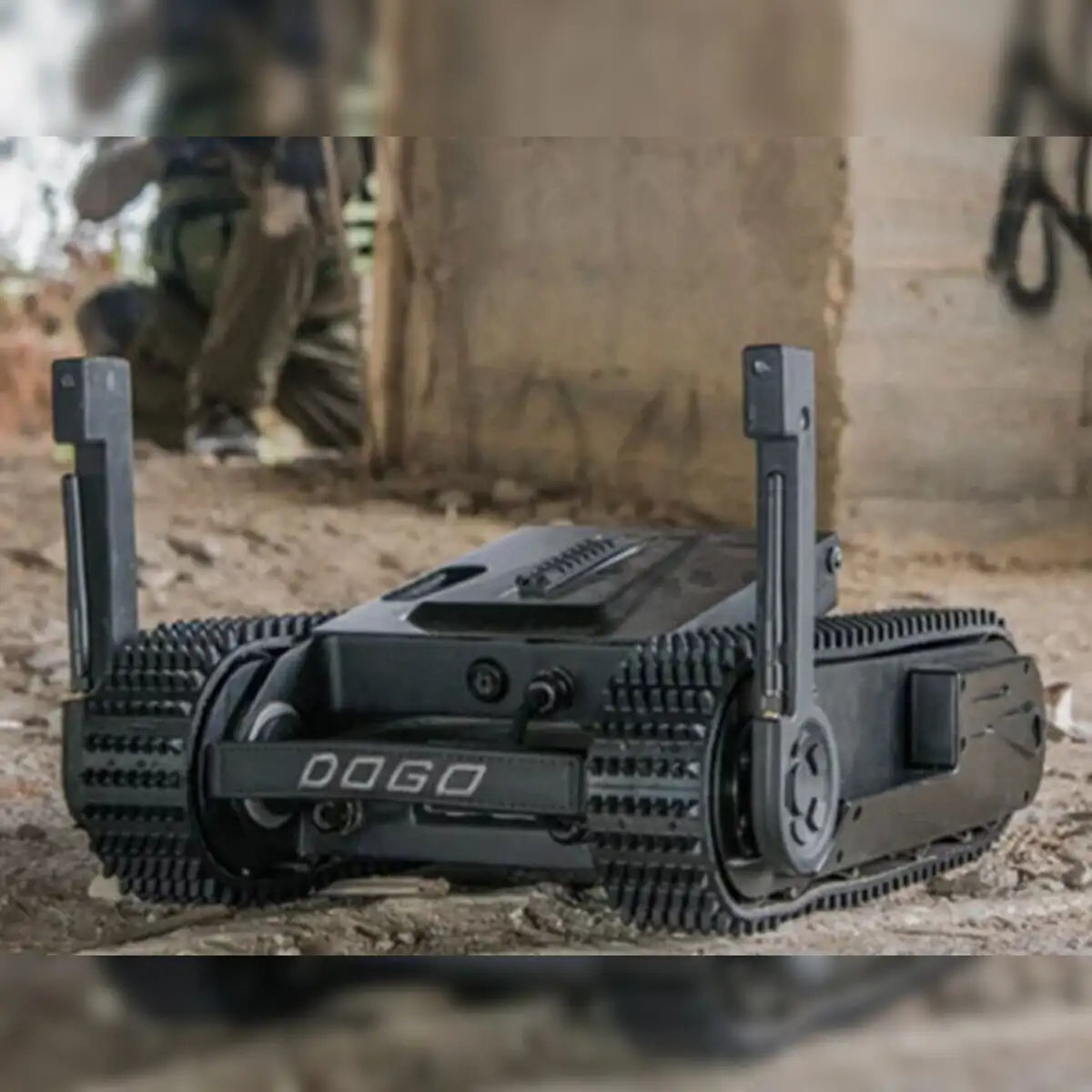
Robotic systems are rapidly changing the tactics of special units around the world. Thus appeared a unique development from General Robotics company – DOGO. This is a one-of-a-kind system specially created for elite anti-terrorist units. It has already passed its baptism of fire and is recognized as effective by military structures, law enforcement agencies and special units in various countries. And according to statistics, combat losses of special units during assault operations with DOGO are 30% less than without its use.

The compact robot weighing only 11 kilograms provides situational awareness, allows conducting negotiations and applying both lethal and non-lethal means of impact. It can be easily carried by hand, in tactical backpacks or small protected cases, which is critically important when conducting special operations.

DOGO’s key innovation is Point & Shoot technology, which allows the operator to simply touch the Ranger control panel screen to direct the system’s weapon. This eliminates the need for complex joystick manipulations and turns any operator into almost a professional – an important factor in stressful situations.

The robot transmits video streams with 360-degree circular view, providing invaluable tactical advantage. And built-in microphone and speaker allow hearing what’s happening in the danger zone and conducting negotiations or reproducing pre-recorded messages. If only they wouldn’t give absolutely all decisions to the machine, considering their hallucinations.

Autor: AIvengo
For 5 years I have been working with machine learning and artificial intelligence. And this field never ceases to amaze, inspire and interest me.
Latest News
UBTech will send Walker S2 robots to serve on China's border for $37 million

Chinese company UBTech won a contract for $37 million. And will send humanoid robots Walker S2 to serve on China's border with Vietnam. South China Morning Post reports that the robots will interact with tourists and staff, perform logistics operations, inspect cargo and patrol the area. And characteristically — they can independently change their battery.

Anthropic accidentally revealed an internal document about Claude's "soul"

Anthropic accidentally revealed the "soul" of artificial intelligence to a user. And this is not a metaphor. This is a quite specific internal document.

Jensen Huang ordered Nvidia employees to use AI everywhere

Jensen Huang announced total mobilization under the banner of artificial intelligence inside Nvidia. And this is no longer a recommendation. This is a requirement.

AI chatbots generate content that exacerbates eating disorders

A joint study by Stanford University and the Center for Democracy and Technology showed a disturbing picture. Chatbots with artificial intelligence pose a serious risk to people with eating disorders. Scientists warn that neural networks hand out harmful advice about diets. They suggest ways to hide the disorder and generate "inspiring weight loss content" that worsens the problem.

OpenAGI released the Lux model that overtakes Google and OpenAI

Startup OpenAGI released the Lux model for computer control and claims this is a breakthrough. According to benchmarks, the model overtakes analogues from Google, OpenAI and Anthropic by a whole generation. Moreover, it works faster. About 1 second per step instead of 3 seconds for competitors. And 10 times cheaper in cost per processing 1 token.