11 out of 14 key scientists left the Llama team

Post Thumbnail

Meta is going through a difficult period in the development of its artificial intelligence technologies. After the unsuccessful release of the Llama 4 model, the company faced new problems. The release of the Behemoth model has been postponed, which was supposed to become the most powerful in the Llama 4 lineup and was planned for release this month. Now the release dates are unknown, and it’s unclear whether this model will see the light at all.

There are several reasons for such a course of events. First of all, Meta’s management expresses serious dissatisfaction with the work of the team responsible for developing Llama. And plans significant changes in its composition. The situation is worsened by the fact that the team has already lost a significant part of key specialists. 11 out of 14 leading scientists who worked on early versions of Llama have left the company.

The second serious problem is related to the Behemoth model itself. Mark Zuckerberg previously made loud statements, promising that the new model would surpass leading language models from competitors — OpenAI, Google, and Anthropic. However, unforeseen difficulties arose during the training process, and the model shows results much worse than expected, which calls into question the advisability of its release in the current state.

These failures occur against the backdrop of a recent scandal when the company was accused of dishonest behavior when testing its models. Meta presented on the LMSYS platform not a user version of the model, but a specially optimized internal version. Tuned for specific tests of this platform, which is nothing other than manipulation of ratings and deception of users.

Почитать из последнего
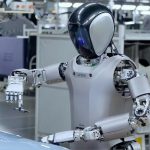
UBTech will send Walker S2 robots to serve on China's border for $37 million
Chinese company UBTech won a contract for $37 million. And will send humanoid robots Walker S2 to serve on China's border with Vietnam. South China Morning Post reports that the robots will interact with tourists and staff, perform logistics operations, inspect cargo and patrol the area. And characteristically — they can independently change their battery.
Anthropic accidentally revealed an internal document about Claude's "soul"
Anthropic accidentally revealed the "soul" of artificial intelligence to a user. And this is not a metaphor. This is a quite specific internal document.
Jensen Huang ordered Nvidia employees to use AI everywhere
Jensen Huang announced total mobilization under the banner of artificial intelligence inside Nvidia. And this is no longer a recommendation. This is a requirement.
AI chatbots generate content that exacerbates eating disorders
A joint study by Stanford University and the Center for Democracy and Technology showed a disturbing picture. Chatbots with artificial intelligence pose a serious risk to people with eating disorders. Scientists warn that neural networks hand out harmful advice about diets. They suggest ways to hide the disorder and generate "inspiring weight loss content" that worsens the problem.
OpenAGI released the Lux model that overtakes Google and OpenAI
Startup OpenAGI released the Lux model for computer control and claims this is a breakthrough. According to benchmarks, the model overtakes analogues from Google, OpenAI and Anthropic by a whole generation. Moreover, it works faster. About 1 second per step instead of 3 seconds for competitors. And 10 times cheaper in cost per processing 1 token.