4 Chinese engineers smuggled 80 TB of AI data in backpacks to Malaysia

An incredible technological odyssey is unfolding right now! Chinese engineers found a surprisingly analog way to bypass digital restrictions. Imagine: 4 employees of a Chinese AI startup are flying from Beijing to Kuala Lumpur. And each carries 15 hard drives in their backpack! In total — 80 terabytes of data for neural network training.
This is not a tech thriller script, but a real situation reported by the Wall Street Journal. A real digital smuggler of the 21st century looks like an ordinary engineer with a heavy backpack! The operation was carefully planned. Transferring such a volume of data via internet would have taken too much time and inevitably attracted unwanted regulatory attention.
Upon arrival in Malaysia, the team rented 300 Nvidia servers for training their models. And according to the Wall Street Journal, this team is still in Malaysia and continues training their AI models to this day. While Chinese companies could previously rely on black markets for buying chips, they are now forced to export the data itself to where computational power is available.
AIvengo >
Reviews >
4 Chinese engineers smuggled 80 TB of AI data in backpacks to Malaysia
Почитать из последнего
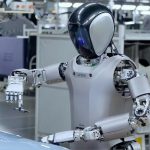
UBTech will send Walker S2 robots to serve on China's border for $37 million
Chinese company UBTech won a contract for $37 million. And will send humanoid robots Walker S2 to serve on China's border with Vietnam. South China Morning Post reports that the robots will interact with tourists and staff, perform logistics operations, inspect cargo and patrol the area. And characteristically — they can independently change their battery.

AI chatbots generate content that exacerbates eating disorders
A joint study by Stanford University and the Center for Democracy and Technology showed a disturbing picture. Chatbots with artificial intelligence pose a serious risk to people with eating disorders. Scientists warn that neural networks hand out harmful advice about diets. They suggest ways to hide the disorder and generate "inspiring weight loss content" that worsens the problem.

OpenAGI released the Lux model that overtakes Google and OpenAI
Startup OpenAGI released the Lux model for computer control and claims this is a breakthrough. According to benchmarks, the model overtakes analogues from Google, OpenAI and Anthropic by a whole generation. Moreover, it works faster. About 1 second per step instead of 3 seconds for competitors. And 10 times cheaper in cost per processing 1 token.