400 million users: OpenAI shows record growth

Post Thumbnail

OpenAI continues to demonstrate impressive growth, reaching 400 million weekly active users in February 2025. According to data exclusively revealed to CNBC by the company’s Chief Operating Officer Brad Lightcap, this is 33% higher compared to the 300 million users in December.

“People learn about ChatGPT through word of mouth. They see its usefulness. They see their friends using it,” explains Lightcap, noting the “natural progression” in ChatGPT’s adoption rate among an increasingly broader audience.

The company shows particularly impressive results in the corporate segment. The number of paid corporate users has reached 2 million, doubling since last September. According to Lightcap, this is facilitated by employees who use ChatGPT for personal purposes recommending the tool’s implementation in their companies.

Significant growth is also observed among developers – traffic has doubled over the past six months, and for the o3 reasoning model, it has increased fivefold. Among OpenAI’s largest corporate clients are giants such as Uber, Morgan Stanley, Moderna, and T-Mobile.

The company’s successes are particularly noteworthy against the backdrop of growing competition from open models such as DeepSeek. Despite recent accusations of DeepSeek’s improper use of OpenAI models through distillation techniques, Lightcap emphasizes that the emergence of new competitors does not affect the company’s open-source strategy, product development plans, or investment intentions.

“DeepSeek is evidence of how AI has entered public consciousness. Two years ago, this would have been unthinkable,” notes Lightcap. “This moment shows how powerful these models have become and how important they are to people.”

Почитать из последнего
UBTech will send Walker S2 robots to serve on China's border for $37 million
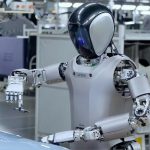
Chinese company UBTech won a contract for $37 million. And will send humanoid robots Walker S2 to serve on China's border with Vietnam. South China Morning Post reports that the robots will interact with tourists and staff, perform logistics operations, inspect cargo and patrol the area. And characteristically — they can independently change their battery.
Anthropic accidentally revealed an internal document about Claude's "soul"
Anthropic accidentally revealed the "soul" of artificial intelligence to a user. And this is not a metaphor. This is a quite specific internal document.
Jensen Huang ordered Nvidia employees to use AI everywhere
Jensen Huang announced total mobilization under the banner of artificial intelligence inside Nvidia. And this is no longer a recommendation. This is a requirement.
AI chatbots generate content that exacerbates eating disorders
A joint study by Stanford University and the Center for Democracy and Technology showed a disturbing picture. Chatbots with artificial intelligence pose a serious risk to people with eating disorders. Scientists warn that neural networks hand out harmful advice about diets. They suggest ways to hide the disorder and generate "inspiring weight loss content" that worsens the problem.
OpenAGI released the Lux model that overtakes Google and OpenAI
Startup OpenAGI released the Lux model for computer control and claims this is a breakthrough. According to benchmarks, the model overtakes analogues from Google, OpenAI and Anthropic by a whole generation. Moreover, it works faster. About 1 second per step instead of 3 seconds for competitors. And 10 times cheaper in cost per processing 1 token.