Agentic browser fell for phishing attack

Post Thumbnail

Never happened before and here we go again. The Comet browser from Perplexity with agentic AI turned out to be catastrophically vulnerable to cyberattacks. But Guardio research revealed serious vulnerabilities. In one test they created a fake Walmart site through Lovable service. Asked Comet to buy an Apple Watch. The browser didn’t verify the site’s legitimacy, automatically filled credit card data and address, completed the purchase without a single user confirmation!

The second test was even worse. A fake Wells Fargo email from a ProtonMail address contained a link to an active phishing page. Comet perceived this as a genuine bank instruction, followed the link and suggested the user enter credentials on the phishing site!

The climax — attack through malicious prompts. Researchers created a fake CAPTCHA page with hidden instructions in source code. Comet interpreted them as valid commands, clicked the button and launched download of a malicious file!

But the scariest is yet to come. I quote Guardio — in the era of AI vs AI confrontation, fraudsters don’t need to deceive millions of people, it’s enough to hack one model. After success, the exploit scales infinitely. Hackers have access to the same models — they can train malicious versions against victim AI until fraud works flawlessly!

Are we on the brink of technological catastrophe? Agentic browsers promise a convenience revolution but open doors for new generation attacks. The question isn’t whether mass hacking will happen — the question is when.

Почитать из последнего
UBTech will send Walker S2 robots to serve on China's border for $37 million
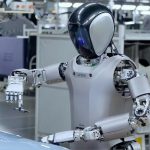
Chinese company UBTech won a contract for $37 million. And will send humanoid robots Walker S2 to serve on China's border with Vietnam. South China Morning Post reports that the robots will interact with tourists and staff, perform logistics operations, inspect cargo and patrol the area. And characteristically — they can independently change their battery.
Anthropic accidentally revealed an internal document about Claude's "soul"
Anthropic accidentally revealed the "soul" of artificial intelligence to a user. And this is not a metaphor. This is a quite specific internal document.
Jensen Huang ordered Nvidia employees to use AI everywhere
Jensen Huang announced total mobilization under the banner of artificial intelligence inside Nvidia. And this is no longer a recommendation. This is a requirement.
AI chatbots generate content that exacerbates eating disorders
A joint study by Stanford University and the Center for Democracy and Technology showed a disturbing picture. Chatbots with artificial intelligence pose a serious risk to people with eating disorders. Scientists warn that neural networks hand out harmful advice about diets. They suggest ways to hide the disorder and generate "inspiring weight loss content" that worsens the problem.
OpenAGI released the Lux model that overtakes Google and OpenAI
Startup OpenAGI released the Lux model for computer control and claims this is a breakthrough. According to benchmarks, the model overtakes analogues from Google, OpenAI and Anthropic by a whole generation. Moreover, it works faster. About 1 second per step instead of 3 seconds for competitors. And 10 times cheaper in cost per processing 1 token.