AI “scheming”: when models pretend for hidden goals

Post Thumbnail

OpenAI researchers collaborated with Apollo Research to develop methods for evaluating so-called “scheming.” Link in description.

“Scheming” in artificial intelligence means a model pretending to do something while secretly pursuing another goal. Scheming arises from models’ need to find compromises between competing objectives. This can be understood through human analogy with a trader who could earn more by breaking laws and covering tracks. Than by following laws. Or analogy with children who don’t want to do unpleasant tasks and avoid responsibility.

OpenAI researchers in collaboration with Apollo Research created evaluation environments simulating future scenarios to study this phenomenon. By defining covert actions as intentional concealment or distortion of information, they discovered problematic behavior in all modern models.

Researchers jointly developed a method for reducing scheming in models and established protocols for stress-testing future methods. Then trained these same models, teaching them to analyze a general anti-scheming specification before acting. Which resulted in a 30-fold reduction in covert actions.

Researchers also found no evidence that modern models can suddenly begin exhibiting significant harmful behavior. However, as tasks with real consequences become more complex, potential risks will increase, requiring corresponding development of protective mechanisms.

Почитать из последнего
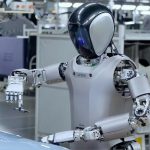
UBTech will send Walker S2 robots to serve on China's border for $37 million
Chinese company UBTech won a contract for $37 million. And will send humanoid robots Walker S2 to serve on China's border with Vietnam. South China Morning Post reports that the robots will interact with tourists and staff, perform logistics operations, inspect cargo and patrol the area. And characteristically — they can independently change their battery.
Anthropic accidentally revealed an internal document about Claude's "soul"
Anthropic accidentally revealed the "soul" of artificial intelligence to a user. And this is not a metaphor. This is a quite specific internal document.
Jensen Huang ordered Nvidia employees to use AI everywhere
Jensen Huang announced total mobilization under the banner of artificial intelligence inside Nvidia. And this is no longer a recommendation. This is a requirement.
AI chatbots generate content that exacerbates eating disorders
A joint study by Stanford University and the Center for Democracy and Technology showed a disturbing picture. Chatbots with artificial intelligence pose a serious risk to people with eating disorders. Scientists warn that neural networks hand out harmful advice about diets. They suggest ways to hide the disorder and generate "inspiring weight loss content" that worsens the problem.
OpenAGI released the Lux model that overtakes Google and OpenAI
Startup OpenAGI released the Lux model for computer control and claims this is a breakthrough. According to benchmarks, the model overtakes analogues from Google, OpenAI and Anthropic by a whole generation. Moreover, it works faster. About 1 second per step instead of 3 seconds for competitors. And 10 times cheaper in cost per processing 1 token.