Algorithmic breakthrough: AI tackled task insurmountable for everyone

GPT-5 with experimental reasoning model from OpenAI solved all 12 problems of the most prestigious International Collegiate Programming Championship ICPC!
Particularly impressive is that GPT-5 handled a task that proved insurmountable for all 139 student teams! Although it required 9 attempts, the result speaks for itself. Artificial intelligence crossed a crucial threshold in solving complex algorithmic problems.
In this technology race, Google also demonstrated impressive results. Their Gemini 2.5 Deep Think solved 10 out of 12 problems, which would theoretically secure 2nd place on the tournament table. Important to note that both companies emphasize their models received no special preparation for this competition!
The championship held September 5 in Baku maintained its student essence. Official winners were students from Saint Petersburg State University, solving 11 problems. Gold medals also went to teams from Japan and China with 10 solved problems.
Interestingly, among former ICPC participants are Google co-founder Sergey Brin and OpenAI Chief Scientist Jakub Pachocki. The circle closes. Artificial intelligence conquers the competition that once shaped the elite of world programming!
AIvengo >
Algorithmic breakthrough: AI tackled task insurmountable for everyone
Почитать из последнего
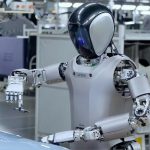
UBTech will send Walker S2 robots to serve on China's border for $37 million
Chinese company UBTech won a contract for $37 million. And will send humanoid robots Walker S2 to serve on China's border with Vietnam. South China Morning Post reports that the robots will interact with tourists and staff, perform logistics operations, inspect cargo and patrol the area. And characteristically — they can independently change their battery.
AI chatbots generate content that exacerbates eating disorders
A joint study by Stanford University and the Center for Democracy and Technology showed a disturbing picture. Chatbots with artificial intelligence pose a serious risk to people with eating disorders. Scientists warn that neural networks hand out harmful advice about diets. They suggest ways to hide the disorder and generate "inspiring weight loss content" that worsens the problem.

OpenAGI released the Lux model that overtakes Google and OpenAI
Startup OpenAGI released the Lux model for computer control and claims this is a breakthrough. According to benchmarks, the model overtakes analogues from Google, OpenAI and Anthropic by a whole generation. Moreover, it works faster. About 1 second per step instead of 3 seconds for competitors. And 10 times cheaper in cost per processing 1 token.