American companies are building services on Chinese AI models

Post Thumbnail

A quiet coup is happening in Silicon Valley. American companies are increasingly building their services on Chinese AI. On DeepSeek, Qwen and Kimi. And this despite the fact that the US and China are conducting a practically open technology race. The reason is simple. Chinese models are cheaper, more performant and open.

I told in one of the previous episodes how Airbnb head Brian Chesky admitted that the company relies on Qwen models from Alibaba for the new assistant in the app. His words, quote: “Very good, fast and cheap”. And integration with ChatGPT, in his opinion, is not ready yet. Chamath Palihapitiya from Social Capital is also moving loads to Chinese Kimi K2, because it, quote “is much more performant and an order of magnitude cheaper” than OpenAI and Anthropic.

But these are not isolated cases. This is a systemic shift. The reason is banal: price, speed and freedom. Chinese models can be downloaded, fine-tuned and run locally. This reduces privacy risks and saves on subscriptions. The developer country becomes secondary. If the model works stably and doesn’t bankrupt, it wins.

It turns out American companies created the problem themselves with their closedness. Chinese open the weights of flagship models, and Americans either ignore open source or release worse versions. Now business is voting with wallets.

Почитать из последнего
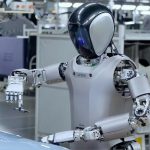
UBTech will send Walker S2 robots to serve on China's border for $37 million
Chinese company UBTech won a contract for $37 million. And will send humanoid robots Walker S2 to serve on China's border with Vietnam. South China Morning Post reports that the robots will interact with tourists and staff, perform logistics operations, inspect cargo and patrol the area. And characteristically — they can independently change their battery.
Anthropic accidentally revealed an internal document about Claude's "soul"
Anthropic accidentally revealed the "soul" of artificial intelligence to a user. And this is not a metaphor. This is a quite specific internal document.
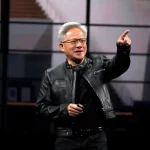
Jensen Huang ordered Nvidia employees to use AI everywhere
Jensen Huang announced total mobilization under the banner of artificial intelligence inside Nvidia. And this is no longer a recommendation. This is a requirement.
AI chatbots generate content that exacerbates eating disorders
A joint study by Stanford University and the Center for Democracy and Technology showed a disturbing picture. Chatbots with artificial intelligence pose a serious risk to people with eating disorders. Scientists warn that neural networks hand out harmful advice about diets. They suggest ways to hide the disorder and generate "inspiring weight loss content" that worsens the problem.
OpenAGI released the Lux model that overtakes Google and OpenAI
Startup OpenAGI released the Lux model for computer control and claims this is a breakthrough. According to benchmarks, the model overtakes analogues from Google, OpenAI and Anthropic by a whole generation. Moreover, it works faster. About 1 second per step instead of 3 seconds for competitors. And 10 times cheaper in cost per processing 1 token.