Anthropic is preparing a new Claude Opus with “extreme reasoning”

Post Thumbnail

Anthropic is preparing to present an updated lineup of its artificial intelligence models. According to The Information, in the coming weeks we will see the return of the Claude Opus model. I remind you that in previous releases, the Opus prefix indicated the most powerful version, while Sonnet indicated the mid-range in capabilities.

The new models will be equipped with an advanced reasoning mode, which specialists call “extreme reasoning.” The main feature of this mode lies in the cyclical principle of operation. The model will independently switch between stages of thinking and using external tools. The process looks like this. First, the model thinks about the task, then if necessary, turns to tools such as a code interpreter or search systems. After which it analyzes the obtained results and returns to the tools again.

This architecture resembles the working principle of artificial intelligence agents and brings the new Claude models closer to the o3 and o4-mini models from OpenAI. It’s important to note that the model will be able to independently determine when it needs to switch between the deep reasoning mode and the use of external tools.

And such implementation of the cyclical “thinking-action” model in Anthropic’s mass products may create a new standard for the entire industry. Potentially accelerating the development of full-fledged autonomous artificial intelligence agents 1-2 years earlier than generally accepted forecasts.

Почитать из последнего
UBTech will send Walker S2 robots to serve on China's border for $37 million
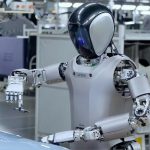
Chinese company UBTech won a contract for $37 million. And will send humanoid robots Walker S2 to serve on China's border with Vietnam. South China Morning Post reports that the robots will interact with tourists and staff, perform logistics operations, inspect cargo and patrol the area. And characteristically — they can independently change their battery.
Anthropic accidentally revealed an internal document about Claude's "soul"
Anthropic accidentally revealed the "soul" of artificial intelligence to a user. And this is not a metaphor. This is a quite specific internal document.
Jensen Huang ordered Nvidia employees to use AI everywhere
Jensen Huang announced total mobilization under the banner of artificial intelligence inside Nvidia. And this is no longer a recommendation. This is a requirement.
AI chatbots generate content that exacerbates eating disorders
A joint study by Stanford University and the Center for Democracy and Technology showed a disturbing picture. Chatbots with artificial intelligence pose a serious risk to people with eating disorders. Scientists warn that neural networks hand out harmful advice about diets. They suggest ways to hide the disorder and generate "inspiring weight loss content" that worsens the problem.
OpenAGI released the Lux model that overtakes Google and OpenAI
Startup OpenAGI released the Lux model for computer control and claims this is a breakthrough. According to benchmarks, the model overtakes analogues from Google, OpenAI and Anthropic by a whole generation. Moreover, it works faster. About 1 second per step instead of 3 seconds for competitors. And 10 times cheaper in cost per processing 1 token.