ASML CEO believes cheap AI models from DeepSeek will increase chip demand

Post Thumbnail

ASML CEO Christophe Fouquet made an unexpected statement, suggesting that the emergence of affordable artificial intelligence models like China’s DeepSeek will lead to increased, not decreased, demand for specialized AI chips.

The statement came amid impressive financial results from the Dutch semiconductor equipment manufacturer. The company exceeded sales and profit forecasts for the fourth quarter, with its order portfolio reaching an impressive 36 billion euros ($37.4 billion) by the end of 2024. This news drove ASML’s shares up, dispelling investors’ concerns about possible semiconductor spending cuts due to DeepSeek’s model release.

“Reducing AI costs could mean more applications. More applications mean growing demand over time. We see this as an opportunity for increased chip demand,” Fouquet stated in a CNBC interview. He emphasized that hyperscalers – tech giants like Microsoft, Amazon, and Google – continue to actively invest in research and development, expanding data center infrastructure to support AI models.

Although the recently introduced open-source DeepSeek R1 model claimed superiority over OpenAI’s o1 in both cost and performance, ASML’s chief refrained from direct comments about the Chinese development. He noted that the company hadn’t received any inquiries from clients about DeepSeek model’s potential impact on chip demand.

ASML management’s position is particularly significant against the backdrop of serious tech stock declines this week, triggered by growing interest in the new DeepSeek model. The leading semiconductor equipment manufacturer’s confidence in demand stability could be an important signal for the entire technology sector.

Почитать из последнего
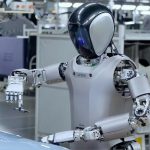
UBTech will send Walker S2 robots to serve on China's border for $37 million
Chinese company UBTech won a contract for $37 million. And will send humanoid robots Walker S2 to serve on China's border with Vietnam. South China Morning Post reports that the robots will interact with tourists and staff, perform logistics operations, inspect cargo and patrol the area. And characteristically — they can independently change their battery.
Anthropic accidentally revealed an internal document about Claude's "soul"
Anthropic accidentally revealed the "soul" of artificial intelligence to a user. And this is not a metaphor. This is a quite specific internal document.
Jensen Huang ordered Nvidia employees to use AI everywhere
Jensen Huang announced total mobilization under the banner of artificial intelligence inside Nvidia. And this is no longer a recommendation. This is a requirement.
AI chatbots generate content that exacerbates eating disorders
A joint study by Stanford University and the Center for Democracy and Technology showed a disturbing picture. Chatbots with artificial intelligence pose a serious risk to people with eating disorders. Scientists warn that neural networks hand out harmful advice about diets. They suggest ways to hide the disorder and generate "inspiring weight loss content" that worsens the problem.
OpenAGI released the Lux model that overtakes Google and OpenAI
Startup OpenAGI released the Lux model for computer control and claims this is a breakthrough. According to benchmarks, the model overtakes analogues from Google, OpenAI and Anthropic by a whole generation. Moreover, it works faster. About 1 second per step instead of 3 seconds for competitors. And 10 times cheaper in cost per processing 1 token.