ChatGPT now knows what you want to buy thanks to Deep Shopping

Post Thumbnail

OpenAI launched Deep Shopping. And this is not about artificial intelligence, but about money. Moreover, they launched it right before the holiday season, when people are ready to spend. Coincidence? I don’t think so.

On the surface, everything looks noble. Instead of scrolling through 10 sites, you simply describe your desire. “Find me the quietest wireless vacuum cleaner for a small apartment” or “I need a gift for my 4-year-old niece who is into art”. The system asks clarifying questions, combs through the internet and you get a personalized product selection.

Technically, this is the same Deep Research, just tailored for shopping. Inside — a specially trained version of GPT-5 mini. They say it works better at product selection than GPT-5 Thinking. The main feature — this is interactivity: the system shows products in real time, you mark what you like, directing the search.

OpenAI particularly emphasizes: the system “relies on ChatGPT’s knowledge about you, obtained from past conversations”. That is, artificial intelligence now not only helps search — it knows your preferences, budget, habits.

But here’s what’s really interesting. The feature is being rolled out to all users, even free ones, and before the holidays there are practically no limits. Generosity? Or the desire to quickly collect data on the purchasing behavior of millions of people?

And the main question remains, which OpenAI has not yet commented on: how exactly do products get into the top output of Deep Shopping? Because whoever controls this output, controls billions of dollars.

Почитать из последнего
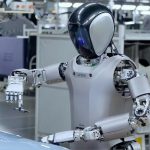
UBTech will send Walker S2 robots to serve on China's border for $37 million
Chinese company UBTech won a contract for $37 million. And will send humanoid robots Walker S2 to serve on China's border with Vietnam. South China Morning Post reports that the robots will interact with tourists and staff, perform logistics operations, inspect cargo and patrol the area. And characteristically — they can independently change their battery.
Anthropic accidentally revealed an internal document about Claude's "soul"
Anthropic accidentally revealed the "soul" of artificial intelligence to a user. And this is not a metaphor. This is a quite specific internal document.
Jensen Huang ordered Nvidia employees to use AI everywhere
Jensen Huang announced total mobilization under the banner of artificial intelligence inside Nvidia. And this is no longer a recommendation. This is a requirement.
AI chatbots generate content that exacerbates eating disorders
A joint study by Stanford University and the Center for Democracy and Technology showed a disturbing picture. Chatbots with artificial intelligence pose a serious risk to people with eating disorders. Scientists warn that neural networks hand out harmful advice about diets. They suggest ways to hide the disorder and generate "inspiring weight loss content" that worsens the problem.
OpenAGI released the Lux model that overtakes Google and OpenAI
Startup OpenAGI released the Lux model for computer control and claims this is a breakthrough. According to benchmarks, the model overtakes analogues from Google, OpenAI and Anthropic by a whole generation. Moreover, it works faster. About 1 second per step instead of 3 seconds for competitors. And 10 times cheaper in cost per processing 1 token.