Chinese sphere robot RT-G weighing 150 kg reaches speeds up to 35 km/h
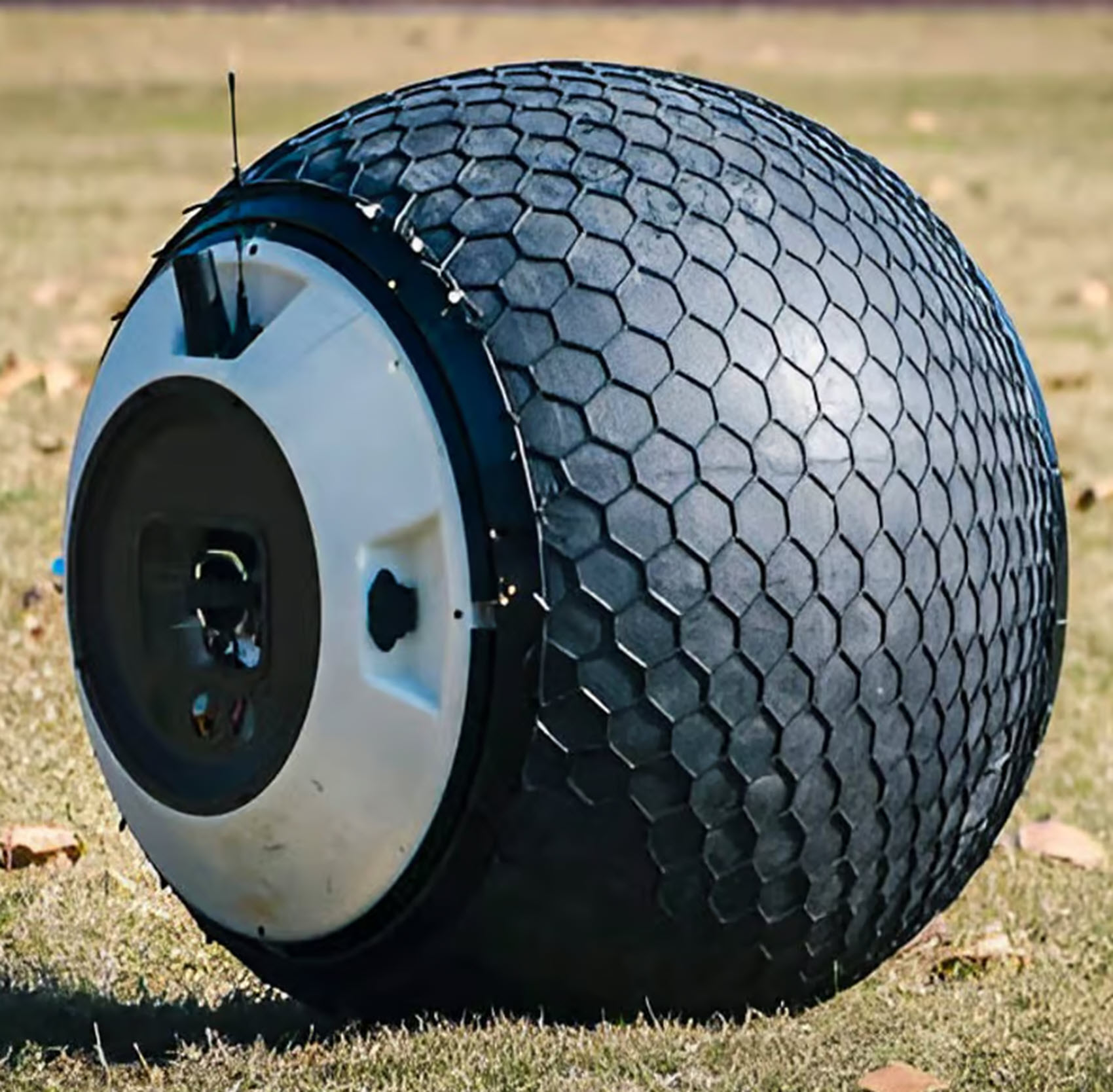
China has such a unique engineering marvel — the spherical robot Rotunbot RT-G. Which can fundamentally change the perception of future police technologies.
The technological masterpiece weighs 150 kilograms and can reach speeds up to 35 kilometers per hour both on land and water! Can you imagine? A police robot that can chase violators through mud, rivers and even withstand falls from ledges. Such versatility makes RT-G a real breakthrough for pursuit scenarios in complex urban and natural environments.
The robot’s technological equipment is no less impressive than its physical capabilities. RT-G is equipped with GPS navigation for precise location determination. High-resolution cameras, ultrasonic sensors and advanced tracking and obstacle avoidance systems. Gyroscopic self-stabilization ensures smooth movement in any conditions.
The humane approach to law enforcement is embodied in a set of non-lethal weapons. Tear gas sprayers, net launchers for immobilizing violators and acoustic devices for crowd dispersal.
RT-G is already actively used in Zhejiang province, where it helps police patrol.
AIvengo >
Reviews >
Chinese sphere robot RT-G weighing 150 kg reaches speeds up to 35 km/h
Почитать из последнего

UBTech will send Walker S2 robots to serve on China's border for $37 million
Chinese company UBTech won a contract for $37 million. And will send humanoid robots Walker S2 to serve on China's border with Vietnam. South China Morning Post reports that the robots will interact with tourists and staff, perform logistics operations, inspect cargo and patrol the area. And characteristically — they can independently change their battery.

AI chatbots generate content that exacerbates eating disorders
A joint study by Stanford University and the Center for Democracy and Technology showed a disturbing picture. Chatbots with artificial intelligence pose a serious risk to people with eating disorders. Scientists warn that neural networks hand out harmful advice about diets. They suggest ways to hide the disorder and generate "inspiring weight loss content" that worsens the problem.

OpenAGI released the Lux model that overtakes Google and OpenAI
Startup OpenAGI released the Lux model for computer control and claims this is a breakthrough. According to benchmarks, the model overtakes analogues from Google, OpenAI and Anthropic by a whole generation. Moreover, it works faster. About 1 second per step instead of 3 seconds for competitors. And 10 times cheaper in cost per processing 1 token.