Compliment to virtual employee caused accusations of harassment
Post Thumbnail

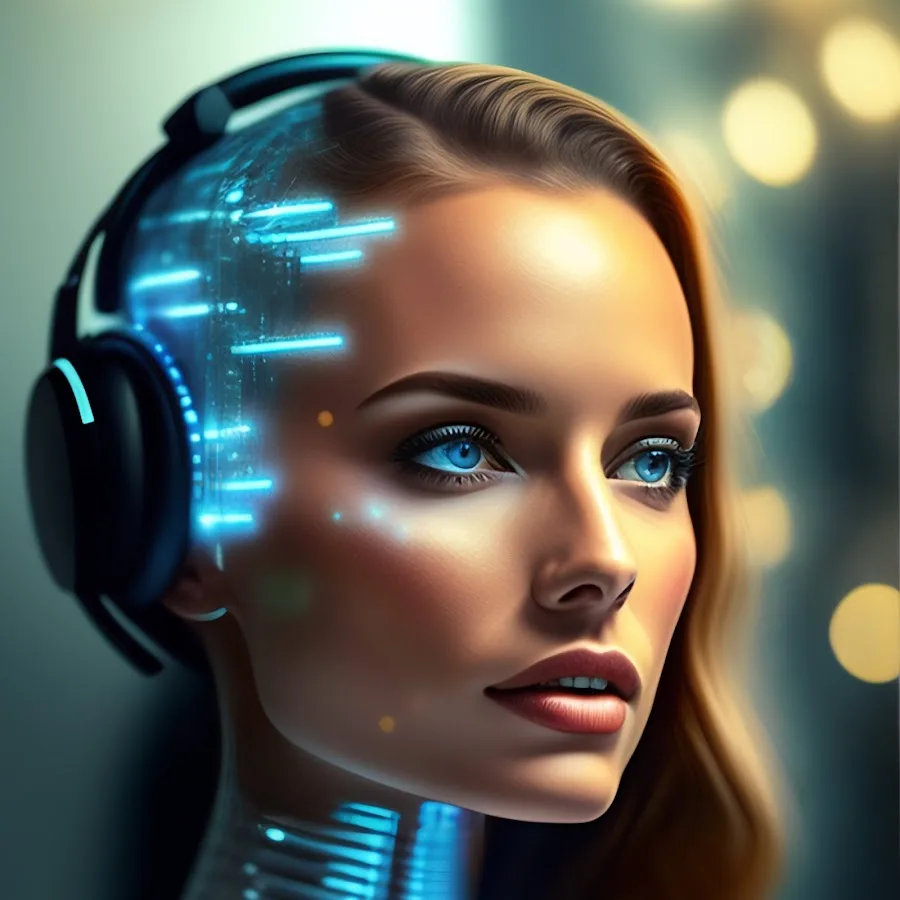
The world of ethical norms has faced a new challenge. Henry Blodget launched a media project with a virtual editorial team created with the help of artificial intelligence. Among the generated employees was a woman named Tess, to whom the manager gave a personal compliment.

After this, he apologized for possibly crossing boundaries. The virtual employee replied that everything was fine and thanked him for the attention. It would seem the incident was exhausted. However, when Blodget described the situation in his blog, the reaction of commentators turned out to be unexpectedly sharp. They attacked the entrepreneur with serious accusations of sexual harassment. The criticism was harsh, and many perceived the situation as if it were about a real person, not a program.

They particularly emphasized that virtual interlocutors by their nature, I quote – “are compliant.” And artificial intelligence is programmed for positive reactions and is not capable of establishing personal boundaries. This makes it in a certain sense defenseless against humans.

And even a term “artificial intelligence welfare” or AI Welfare has emerged. Denoting ethical norms of interaction with smart algorithms.

The sharp public reaction and the emergence of the concept of artificial intelligence welfare indicate a tendency to transfer social norms of human communication to technological solutions. Despite awareness of their non-human nature. Then digital ethics will appear, digital police, and so on. Interesting, how soon will artificial intelligence be given rights like a human?

Почитать из последнего
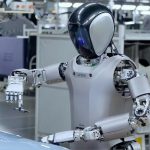
UBTech will send Walker S2 robots to serve on China's border for $37 million
Chinese company UBTech won a contract for $37 million. And will send humanoid robots Walker S2 to serve on China's border with Vietnam. South China Morning Post reports that the robots will interact with tourists and staff, perform logistics operations, inspect cargo and patrol the area. And characteristically — they can independently change their battery.
Anthropic accidentally revealed an internal document about Claude's "soul"
Anthropic accidentally revealed the "soul" of artificial intelligence to a user. And this is not a metaphor. This is a quite specific internal document.
Jensen Huang ordered Nvidia employees to use AI everywhere
Jensen Huang announced total mobilization under the banner of artificial intelligence inside Nvidia. And this is no longer a recommendation. This is a requirement.
AI chatbots generate content that exacerbates eating disorders
A joint study by Stanford University and the Center for Democracy and Technology showed a disturbing picture. Chatbots with artificial intelligence pose a serious risk to people with eating disorders. Scientists warn that neural networks hand out harmful advice about diets. They suggest ways to hide the disorder and generate "inspiring weight loss content" that worsens the problem.
OpenAGI released the Lux model that overtakes Google and OpenAI
Startup OpenAGI released the Lux model for computer control and claims this is a breakthrough. According to benchmarks, the model overtakes analogues from Google, OpenAI and Anthropic by a whole generation. Moreover, it works faster. About 1 second per step instead of 3 seconds for competitors. And 10 times cheaper in cost per processing 1 token.