DeepMind created AI to save endangered species through sounds

Post Thumbnail

DeepMind introduced Perch 2.0 — an AI that listens to nature and saves endangered species. This compact model has been downloaded over 250,000 times and is revolutionizing concepts of bioacoustic monitoring! Link in description.

Imagine the scale of innovation. One hour of recording from tropical rainforest contains dozens of overlapping animal voices. Manual decoding — that’s weeks of hellish work. Perch 2.0 analyzes this data instantly, identifying critically important signals about ecosystem health.

No billion parameters, no complex self-supervised learning. Just brilliantly optimized architecture with 3 specialized heads. Classification of 15,000 species, prototypical for semantic logits and recording source prediction.

Take 5 seconds of audio — get a vector for searching similar recordings, clustering sounds or training a classifier for new species. Works without GPU, without fine-tuning. Simply fixed embeddings of highest quality.

Real results are impressive. In Australia, they discovered a new population of the disappearing Plains Wanderer using Perch. In Hawaii, the model recognized trills of the rarest honeycreepers. Sound processing accelerated 50 times. And this is critically important for saving species on the brink of extinction!

Birds, mammals, amphibians, underwater coral reef scenes, anthropogenic noise — the model adapts to any conditions. Excellent transferability to marine data with whales and dolphins that were barely in training!

DeepMind proved — quality data labeling, simple architecture and clear problem formulation are more important than endless parameters.

Почитать из последнего
UBTech will send Walker S2 robots to serve on China's border for $37 million
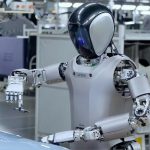
Chinese company UBTech won a contract for $37 million. And will send humanoid robots Walker S2 to serve on China's border with Vietnam. South China Morning Post reports that the robots will interact with tourists and staff, perform logistics operations, inspect cargo and patrol the area. And characteristically — they can independently change their battery.
Anthropic accidentally revealed an internal document about Claude's "soul"
Anthropic accidentally revealed the "soul" of artificial intelligence to a user. And this is not a metaphor. This is a quite specific internal document.
Jensen Huang ordered Nvidia employees to use AI everywhere
Jensen Huang announced total mobilization under the banner of artificial intelligence inside Nvidia. And this is no longer a recommendation. This is a requirement.
AI chatbots generate content that exacerbates eating disorders
A joint study by Stanford University and the Center for Democracy and Technology showed a disturbing picture. Chatbots with artificial intelligence pose a serious risk to people with eating disorders. Scientists warn that neural networks hand out harmful advice about diets. They suggest ways to hide the disorder and generate "inspiring weight loss content" that worsens the problem.
OpenAGI released the Lux model that overtakes Google and OpenAI
Startup OpenAGI released the Lux model for computer control and claims this is a breakthrough. According to benchmarks, the model overtakes analogues from Google, OpenAI and Anthropic by a whole generation. Moreover, it works faster. About 1 second per step instead of 3 seconds for competitors. And 10 times cheaper in cost per processing 1 token.