DeepMind replaces Asimov’s laws with adaptive dataset for robots
Post Thumbnail

Google DeepMind under the leadership of Carolina Parada is rethinking fundamental principles of robot safety and wants to move away from classical Asimov’s laws to a more flexible, trainable system. The new so-called “Asimov Dataset” represents not a rigid set of rules, but an adaptive base of potentially dangerous situation scenarios.

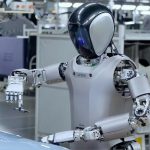
The key difference of the new approach lies in the method of risk processing. Modern robots don’t simply follow preset directives – they learn to analyze context. And make decisions based on an extensive base of examples. When a robot sees a glass on the edge of a table, it doesn’t execute a pre-programmed command. But evaluates the situation and moves the object to a safe position. Discovering an object on the floor, the system recognizes potential danger for a person and eliminates it.

The dataset is formed based on analysis of real incidents from different countries of the world, which ensures diversity of cultural and social contexts. Each scenario is accompanied by visual examples and instructions for risk minimization, creating a comprehensive educational environment for artificial intelligence.

This approach differs with 3 fundamental features: dynamic data updating, hybrid control with human participation and openness for testing by third-party developers. Thus, at DeepMind they believe that the “Asimov Dataset” creates not just technology, but an evolving safety ecosystem.

Почитать из последнего
UBTech will send Walker S2 robots to serve on China's border for $37 million
Chinese company UBTech won a contract for $37 million. And will send humanoid robots Walker S2 to serve on China's border with Vietnam. South China Morning Post reports that the robots will interact with tourists and staff, perform logistics operations, inspect cargo and patrol the area. And characteristically — they can independently change their battery.
Anthropic accidentally revealed an internal document about Claude's "soul"
Anthropic accidentally revealed the "soul" of artificial intelligence to a user. And this is not a metaphor. This is a quite specific internal document.
Jensen Huang ordered Nvidia employees to use AI everywhere
Jensen Huang announced total mobilization under the banner of artificial intelligence inside Nvidia. And this is no longer a recommendation. This is a requirement.
AI chatbots generate content that exacerbates eating disorders
A joint study by Stanford University and the Center for Democracy and Technology showed a disturbing picture. Chatbots with artificial intelligence pose a serious risk to people with eating disorders. Scientists warn that neural networks hand out harmful advice about diets. They suggest ways to hide the disorder and generate "inspiring weight loss content" that worsens the problem.
OpenAGI released the Lux model that overtakes Google and OpenAI
Startup OpenAGI released the Lux model for computer control and claims this is a breakthrough. According to benchmarks, the model overtakes analogues from Google, OpenAI and Anthropic by a whole generation. Moreover, it works faster. About 1 second per step instead of 3 seconds for competitors. And 10 times cheaper in cost per processing 1 token.