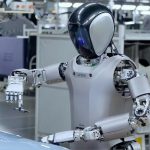
FALCON from Carnegie Mellon doubled the accuracy of humanoid robot control
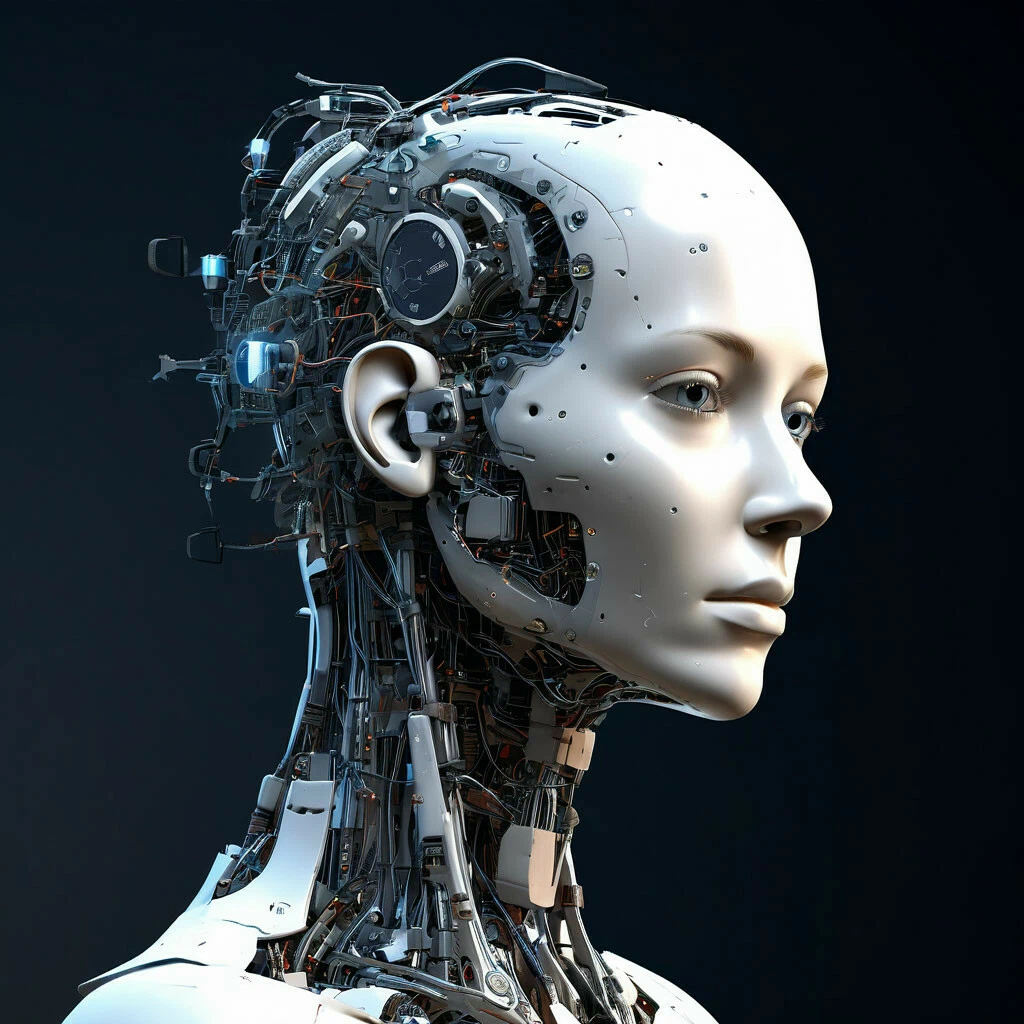
Scientists from the Adaptive Robotics Laboratory at Carnegie Mellon University created a system called FALCON, which significantly improves the ability of humanoid robots to perform complex tasks with high force loads. This is a real breakthrough in the field of robotics, opening new possibilities for robot applications in real-world conditions.
The main feature of FALCON lies in its architecture, consisting of 2 separate artificial intelligence agents that work as a single unit. The first agent is responsible for stable walking and balance, while the second controls precise hand movements considering applied force. Thanks to such function division, robots can learn in a virtual environment to perform real physical tasks requiring not only precision but also significant force.
After training in simulation, robots are capable of performing actions such as moving heavy objects, opening massive doors, or maintaining balance under external influences, for example, when they are pushed. This is a significant step forward compared to previous control systems.
One of the main advantages of FALCON is its versatility. The system does not require complex configuration for each new robot model. Researchers tested it on 2 completely different platforms — Unitree G1 and Booster T1. And in both cases, the results turned out to be impressive. Hand control accuracy increased by 100%, and stability when performing force tasks reached the level of industrial requirements.
The FALCON system can withstand loads up to 100 newtons, which is almost a third of the robot’s own weight.
I am really surprised! FALCON for the first time offers an effective solution to the problem of simultaneous control of balance and force impact. Which historically has been one of the main obstacles for applying humanoid robots in real force tasks.