Five IT founders earned over $200 billion from AI boom
Post Thumbnail

Five founders of IT companies can boast wealth of over 200 billion dollars each against the background of the AI boom. Just recently, as The Economic Times notes, having 100 billion dollars allowed access to the world elite club, but now the bar has doubled.

These are Elon Musk, Larry Ellison, Larry Page and Sergey Brin. The last two are founders of Google, Ellison stood at the origins of Oracle, and Elon Musk so far has quite an indirect relation to the AI sphere, being the founder of startup xAI. The main part of his wealth is provided by Tesla shares.

Such a sum exceeds the current capitalization of many other companies like PepsiCo, Uber, Walt Disney and Intel.

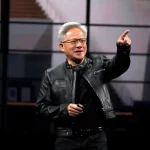
Other representatives of the IT industry are not so far from this level. Steve Ballmer has 181 billion dollars. Also nearby is Nvidia founder Jensen Huang. He has 176 billion dollars. And he’s racing toward the cherished threshold at incredibly high speed.

And just this year the “magnificent five” increased their assets by 300 billion dollars. Well, and Elon Musk continues to remain the richest person on the planet with wealth of 457 billion dollars.
Почитать из последнего
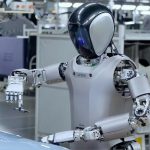
UBTech will send Walker S2 robots to serve on China's border for $37 million
Chinese company UBTech won a contract for $37 million. And will send humanoid robots Walker S2 to serve on China's border with Vietnam. South China Morning Post reports that the robots will interact with tourists and staff, perform logistics operations, inspect cargo and patrol the area. And characteristically — they can independently change their battery.
Anthropic accidentally revealed an internal document about Claude's "soul"
Anthropic accidentally revealed the "soul" of artificial intelligence to a user. And this is not a metaphor. This is a quite specific internal document.
Jensen Huang ordered Nvidia employees to use AI everywhere
Jensen Huang announced total mobilization under the banner of artificial intelligence inside Nvidia. And this is no longer a recommendation. This is a requirement.
AI chatbots generate content that exacerbates eating disorders
A joint study by Stanford University and the Center for Democracy and Technology showed a disturbing picture. Chatbots with artificial intelligence pose a serious risk to people with eating disorders. Scientists warn that neural networks hand out harmful advice about diets. They suggest ways to hide the disorder and generate "inspiring weight loss content" that worsens the problem.
OpenAGI released the Lux model that overtakes Google and OpenAI
Startup OpenAGI released the Lux model for computer control and claims this is a breakthrough. According to benchmarks, the model overtakes analogues from Google, OpenAI and Anthropic by a whole generation. Moreover, it works faster. About 1 second per step instead of 3 seconds for competitors. And 10 times cheaper in cost per processing 1 token.