Google created Gemini Computer — the first generative operating system

Google presented a concept that turns our understanding of operating systems upside down. Meet Gemini Computer – the first fully generative operating system. Where literally everything is created in real time! Google seems to be pioneers in implementing the concept that former OpenAI employee Andrej Karpathy theorized about.
In this system there are no familiar applications and interfaces. Real magic happens here. Every screen, every control element, every application is generated by the AI model right at the moment of your interaction with the system. You press a button – and the next screen is completely created from scratch, taking into account all previous actions.
The traditional concept of RAM is completely reconceptualized! Instead of physical file storage, the model’s context window is used. Documents are not saved in the classical sense, but recreated anew each time you access them. This is literally a computer existing in artificial intelligence’s imagination!
Google called this development Gemini Computer. It’s important to note that this is so far a demonstration of the new Gemini 2.5 Flash Light model’s capabilities, not a full-fledged product. But the impressive performance of 460 tokens per second makes such an approach realistic.
AIvengo >
Reviews >
Google created Gemini Computer — the first generative operating system
Почитать из последнего
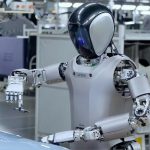
UBTech will send Walker S2 robots to serve on China's border for $37 million
Chinese company UBTech won a contract for $37 million. And will send humanoid robots Walker S2 to serve on China's border with Vietnam. South China Morning Post reports that the robots will interact with tourists and staff, perform logistics operations, inspect cargo and patrol the area. And characteristically — they can independently change their battery.

AI chatbots generate content that exacerbates eating disorders
A joint study by Stanford University and the Center for Democracy and Technology showed a disturbing picture. Chatbots with artificial intelligence pose a serious risk to people with eating disorders. Scientists warn that neural networks hand out harmful advice about diets. They suggest ways to hide the disorder and generate "inspiring weight loss content" that worsens the problem.

OpenAGI released the Lux model that overtakes Google and OpenAI
Startup OpenAGI released the Lux model for computer control and claims this is a breakthrough. According to benchmarks, the model overtakes analogues from Google, OpenAI and Anthropic by a whole generation. Moreover, it works faster. About 1 second per step instead of 3 seconds for competitors. And 10 times cheaper in cost per processing 1 token.