Google diversifies AI chip production

Post Thumbnail

According to an exclusive report by The Information, Alphabet (GOOG, GOOGL) is preparing for a strategic partnership with Taiwanese company MediaTek (2454.TW) to develop the next generation of its AI chips — Tensor Processing Units (TPU), with production planned for next year.

This move marks a significant change in Google’s AI processor production strategy, although the company is not severing ties with Broadcom (AVGO) — its exclusive AI chip development partner in recent years. The information was confirmed by an employee of the San Jose-based company Broadcom.

Google’s decision to develop its own server AI chips, like Nvidia (NVDA), gives the company a significant competitive advantage in the artificial intelligence race. This approach allows it to reduce dependence on Nvidia at a time when competitors, including Microsoft (MSFT)-backed OpenAI and Meta Platforms (META), are facing growing demand for Nvidia chips.

Late last year, Google introduced the sixth generation of TPU, aiming to provide itself and Google Cloud customers with an alternative to Nvidia processors, which remain the most in-demand in the industry. The upcoming partnership with MediaTek could significantly strengthen Google’s position in the AI chip market.

Representatives from Google, MediaTek, and Broadcom have not yet provided comments regarding the potential collaboration. However, this development reflects a growing trend toward supply chain diversification in the technology sector, especially in the critical area of AI computing.

Почитать из последнего
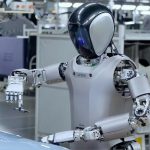
UBTech will send Walker S2 robots to serve on China's border for $37 million
Chinese company UBTech won a contract for $37 million. And will send humanoid robots Walker S2 to serve on China's border with Vietnam. South China Morning Post reports that the robots will interact with tourists and staff, perform logistics operations, inspect cargo and patrol the area. And characteristically — they can independently change their battery.
Anthropic accidentally revealed an internal document about Claude's "soul"
Anthropic accidentally revealed the "soul" of artificial intelligence to a user. And this is not a metaphor. This is a quite specific internal document.
Jensen Huang ordered Nvidia employees to use AI everywhere
Jensen Huang announced total mobilization under the banner of artificial intelligence inside Nvidia. And this is no longer a recommendation. This is a requirement.
AI chatbots generate content that exacerbates eating disorders
A joint study by Stanford University and the Center for Democracy and Technology showed a disturbing picture. Chatbots with artificial intelligence pose a serious risk to people with eating disorders. Scientists warn that neural networks hand out harmful advice about diets. They suggest ways to hide the disorder and generate "inspiring weight loss content" that worsens the problem.
OpenAGI released the Lux model that overtakes Google and OpenAI
Startup OpenAGI released the Lux model for computer control and claims this is a breakthrough. According to benchmarks, the model overtakes analogues from Google, OpenAI and Anthropic by a whole generation. Moreover, it works faster. About 1 second per step instead of 3 seconds for competitors. And 10 times cheaper in cost per processing 1 token.