GPT-5 optimizes costs

Post Thumbnail

The Register reveals OpenAI’s strategy and according to them, GPT-5 turned out to be not a revolution of capabilities, but genius cost optimization.

Instead of a monolithic model — composition of at least 2 systems: light and heavy, plus intelligent router. Imagine — each request is analyzed and the system automatically chooses the optimal model. Simple question — light model. Complex task — heavy artillery kicks in. Computing savings are enormous!

Automatic reasoning management becomes a key tool. Reasoning is activated only when truly necessary. Free users can’t control this. Less computation, fewer tokens, radical cost reduction. The smart system decides itself when deep thinking is needed and when surface answers suffice.

But why so? 700 million active users per week, but only 3% paying! ChatGPT became synonymous with AI, like Google became synonymous with search. But such leadership requires astronomical infrastructure costs.

Strategic limitations work for optimization. 8,000 tokens free, up to 128,000 for Plus and Pro subscribers. Temporary shutdown of GPT-4o, then return only for paying users. Every decision — part of a grand savings strategy.

Competitive pressure intensifies. Google has stable profit, own data centers and TPUs. Microsoft helps, but it’s not enough. OpenAI is forced to constantly seek financing for training and inference. Under these conditions, efficiency becomes a survival issue. So they survive as they can.

Perhaps the era of smart optimization begins, where engineering elegance matters more than brute force. And GPT-5 is like a manifesto of the new approach.

Почитать из последнего
UBTech will send Walker S2 robots to serve on China's border for $37 million
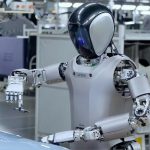
Chinese company UBTech won a contract for $37 million. And will send humanoid robots Walker S2 to serve on China's border with Vietnam. South China Morning Post reports that the robots will interact with tourists and staff, perform logistics operations, inspect cargo and patrol the area. And characteristically — they can independently change their battery.
Anthropic accidentally revealed an internal document about Claude's "soul"
Anthropic accidentally revealed the "soul" of artificial intelligence to a user. And this is not a metaphor. This is a quite specific internal document.
Jensen Huang ordered Nvidia employees to use AI everywhere
Jensen Huang announced total mobilization under the banner of artificial intelligence inside Nvidia. And this is no longer a recommendation. This is a requirement.
AI chatbots generate content that exacerbates eating disorders
A joint study by Stanford University and the Center for Democracy and Technology showed a disturbing picture. Chatbots with artificial intelligence pose a serious risk to people with eating disorders. Scientists warn that neural networks hand out harmful advice about diets. They suggest ways to hide the disorder and generate "inspiring weight loss content" that worsens the problem.
OpenAGI released the Lux model that overtakes Google and OpenAI
Startup OpenAGI released the Lux model for computer control and claims this is a breakthrough. According to benchmarks, the model overtakes analogues from Google, OpenAI and Anthropic by a whole generation. Moreover, it works faster. About 1 second per step instead of 3 seconds for competitors. And 10 times cheaper in cost per processing 1 token.