How Robomart reduces delivery costs by 70% through robotics
Post Thumbnail

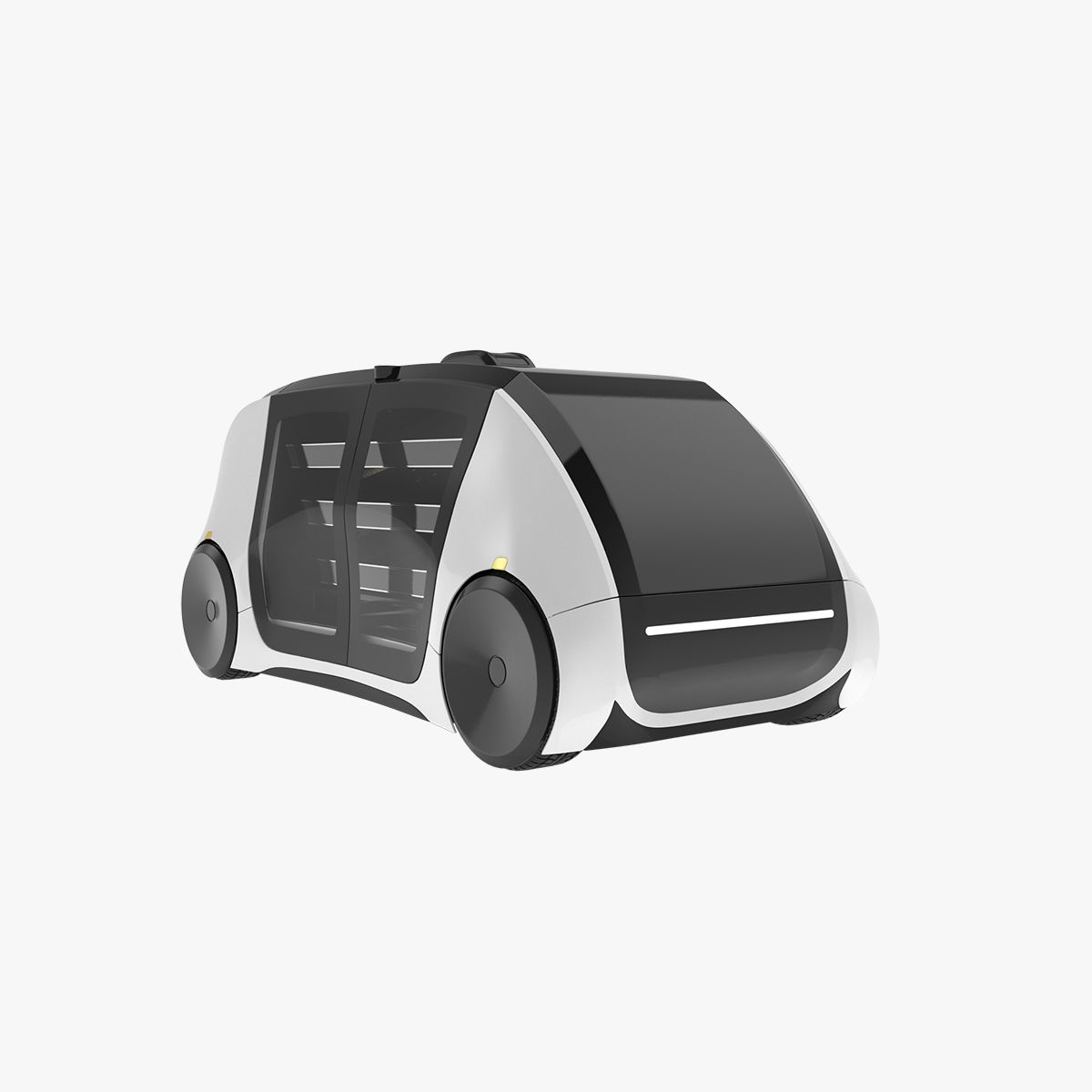
$3 for any delivery. Robomart challenges giants DoorDash and Uber Eats with a business model new to the industry. Their new robot RM5 completely changes delivery economics.

500 pounds of cargo. 10 individual compartments. Level 4 autonomy. This isn’t just a robot. This is a mobile order distribution center. Each compartment stores a separate order. And the robot performs multiple deliveries in one route.

Ali Ahmed, Robomart founder, knows the problem from inside. In 2015 he created Dispatch Messenger in the UK. The delivery platform with live couriers couldn’t become profitable. $18 per hour for a courier means $9 or $10 costs per delivery.

Therefore Robomart robots reduce delivery costs by 70%. This is a critical difference for the entire industry. The buyer pays a fixed $3. No hidden fees. No tips. No peak hour surcharges.

The company creates an autonomous marketplace. Retailers open storefronts in the Robomart app. The model resembles UberEats or DoorDash. But the economics are fundamentally different. Robots work 24/7 without fatigue and salary.

Austin, Texas will be the first launch city. In coming months Robomart connects local retailers. Full service launch is planned for the end of this year.

Interesting funding fact. The company raised less than $5 million since 2017. With this money they created 5 full robot generations. Developed patented technology. Built one autonomous marketplace for public roads. While their competitors spend hundreds of millions of dollars annually.

Почитать из последнего
UBTech will send Walker S2 robots to serve on China's border for $37 million
Chinese company UBTech won a contract for $37 million. And will send humanoid robots Walker S2 to serve on China's border with Vietnam. South China Morning Post reports that the robots will interact with tourists and staff, perform logistics operations, inspect cargo and patrol the area. And characteristically — they can independently change their battery.
Anthropic accidentally revealed an internal document about Claude's "soul"
Anthropic accidentally revealed the "soul" of artificial intelligence to a user. And this is not a metaphor. This is a quite specific internal document.
Jensen Huang ordered Nvidia employees to use AI everywhere
Jensen Huang announced total mobilization under the banner of artificial intelligence inside Nvidia. And this is no longer a recommendation. This is a requirement.
AI chatbots generate content that exacerbates eating disorders
A joint study by Stanford University and the Center for Democracy and Technology showed a disturbing picture. Chatbots with artificial intelligence pose a serious risk to people with eating disorders. Scientists warn that neural networks hand out harmful advice about diets. They suggest ways to hide the disorder and generate "inspiring weight loss content" that worsens the problem.
OpenAGI released the Lux model that overtakes Google and OpenAI
Startup OpenAGI released the Lux model for computer control and claims this is a breakthrough. According to benchmarks, the model overtakes analogues from Google, OpenAI and Anthropic by a whole generation. Moreover, it works faster. About 1 second per step instead of 3 seconds for competitors. And 10 times cheaper in cost per processing 1 token.