Meta invests hundreds of billions in superclusters with 5 GW power consumption

Mark Zuckerberg announced unprecedented investments in next-generation AI infrastructure! The company will invest hundreds of billions of dollars in creating server superclusters. Which will consume 1 to 5 GW each. This is power consumption at the level of an entire nuclear power plant!
After freezing the Llama 4 project, all of Meta’s AI directions are now united under the roof of Superintelligence Labs. The company is betting on creating larger-scale models that require not just “more servers”, but real mini-energy systems.
One supercluster called Prometheus is planned to launch as early as 2026. It will be followed by the even more powerful Hyperion, which will consume 5 GW and unite tens of thousands of advanced graphics processors.
The new architecture includes power substations directly on campus grounds, heat recovery systems and industrial-scale liquid cooling. All this will ensure minimal network latency and significantly accelerate model training cycles.
Already this year capital expenditures will reach up to $72 billion and continue to grow. Zuckerberg is confident that the advertising business will bring sufficient funds to cover these risks.
AIvengo >
Reviews >
Meta invests hundreds of billions in superclusters with 5 GW power consumption
Почитать из последнего
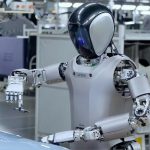
UBTech will send Walker S2 robots to serve on China's border for $37 million
Chinese company UBTech won a contract for $37 million. And will send humanoid robots Walker S2 to serve on China's border with Vietnam. South China Morning Post reports that the robots will interact with tourists and staff, perform logistics operations, inspect cargo and patrol the area. And characteristically — they can independently change their battery.
AI chatbots generate content that exacerbates eating disorders
A joint study by Stanford University and the Center for Democracy and Technology showed a disturbing picture. Chatbots with artificial intelligence pose a serious risk to people with eating disorders. Scientists warn that neural networks hand out harmful advice about diets. They suggest ways to hide the disorder and generate "inspiring weight loss content" that worsens the problem.
OpenAGI released the Lux model that overtakes Google and OpenAI
Startup OpenAGI released the Lux model for computer control and claims this is a breakthrough. According to benchmarks, the model overtakes analogues from Google, OpenAI and Anthropic by a whole generation. Moreover, it works faster. About 1 second per step instead of 3 seconds for competitors. And 10 times cheaper in cost per processing 1 token.