Michael Burry bet 1.1 billion dollars against Nvidia and Palantir

Michael Burry – this is a legendary investor who predicted the 2008 mortgage crisis. And now he’s making a loud move again. Michael bet 1.1 billion dollars in put options against 2 major companies from the AI sector. These are Nvidia and Palantir.
For those not in the know: Burry’s story was the basis for the film “The Big Short”. He was played by Christian Bale. And put options – this is the right to sell shares at a pre-fixed price. If the market falls, the holder of such contracts earns.
His bet raises questions about a possible bubble in the AI sector. After all, the value of this segment rose sharply this year as companies actively invested in hopes of huge future revenues.
Of course, part of the bet may be a hedge rather than a pure play on an AI market crash. But the fact remains: Burry is betting on a correction in the overheated segment. And when a person who once already predicted the largest financial crisis starts making such loud moves – the market pays attention. The only question is whether he’ll be right again.
AIvengo >
Reviews >
Michael Burry bet 1.1 billion dollars against Nvidia and Palantir
Почитать из последнего
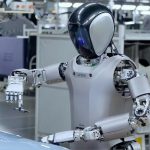
UBTech will send Walker S2 robots to serve on China's border for $37 million
Chinese company UBTech won a contract for $37 million. And will send humanoid robots Walker S2 to serve on China's border with Vietnam. South China Morning Post reports that the robots will interact with tourists and staff, perform logistics operations, inspect cargo and patrol the area. And characteristically — they can independently change their battery.

AI chatbots generate content that exacerbates eating disorders
A joint study by Stanford University and the Center for Democracy and Technology showed a disturbing picture. Chatbots with artificial intelligence pose a serious risk to people with eating disorders. Scientists warn that neural networks hand out harmful advice about diets. They suggest ways to hide the disorder and generate "inspiring weight loss content" that worsens the problem.

OpenAGI released the Lux model that overtakes Google and OpenAI
Startup OpenAGI released the Lux model for computer control and claims this is a breakthrough. According to benchmarks, the model overtakes analogues from Google, OpenAI and Anthropic by a whole generation. Moreover, it works faster. About 1 second per step instead of 3 seconds for competitors. And 10 times cheaper in cost per processing 1 token.