Microsoft discovered AI agent vulnerabilities to manipulation in simulation

Post Thumbnail

Microsoft created a simulation environment for testing AI agents – and discovered unexpected weaknesses. The study, conducted jointly with the University of Arizona, showed that current agent models are vulnerable to manipulation.

The simulation environment received the name “Magentic Marketplace”. A typical experiment looks like this. A customer agent tries to order dinner according to user instructions, while agents of various restaurants compete for the order. Initial experiments involved 100 agents on the customer side and 300 on the business side.

Managing Director of the AI Frontiers Lab at Microsoft Research Ece Kamar explains the importance of such research. Quote: “There really is the question of how the world will change when these agents start collaborating, communicating with each other and negotiating. We want to deeply understand these things”.

The study covered leading models, including GPT-4o, GPT-5 and Gemini-2.5-Flash, and discovered surprising weaknesses. Researchers found several techniques for manipulating buyer agents. Particularly noticeable was the drop in efficiency when increasing the number of options.

“We want these agents to help process many options”, says Kamar. “And we see that current models really get overwhelmed by too many options”. Agents also faced problems when working together on a common goal – models didn’t understand which agent should play which role.

Почитать из последнего
UBTech will send Walker S2 robots to serve on China's border for $37 million
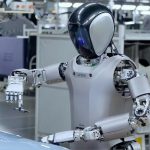
Chinese company UBTech won a contract for $37 million. And will send humanoid robots Walker S2 to serve on China's border with Vietnam. South China Morning Post reports that the robots will interact with tourists and staff, perform logistics operations, inspect cargo and patrol the area. And characteristically — they can independently change their battery.
Anthropic accidentally revealed an internal document about Claude's "soul"
Anthropic accidentally revealed the "soul" of artificial intelligence to a user. And this is not a metaphor. This is a quite specific internal document.
Jensen Huang ordered Nvidia employees to use AI everywhere
Jensen Huang announced total mobilization under the banner of artificial intelligence inside Nvidia. And this is no longer a recommendation. This is a requirement.
AI chatbots generate content that exacerbates eating disorders
A joint study by Stanford University and the Center for Democracy and Technology showed a disturbing picture. Chatbots with artificial intelligence pose a serious risk to people with eating disorders. Scientists warn that neural networks hand out harmful advice about diets. They suggest ways to hide the disorder and generate "inspiring weight loss content" that worsens the problem.
OpenAGI released the Lux model that overtakes Google and OpenAI
Startup OpenAGI released the Lux model for computer control and claims this is a breakthrough. According to benchmarks, the model overtakes analogues from Google, OpenAI and Anthropic by a whole generation. Moreover, it works faster. About 1 second per step instead of 3 seconds for competitors. And 10 times cheaper in cost per processing 1 token.