Microsoft’s strategic pivot: proprietary models against OpenAI dependency

Microsoft is no longer fully dependent on OpenAI. The company introduced 2 proprietary AI models. MAI-Voice-1 for speech generation and MAI-1-preview for text. This is a turning point in the tech giant’s strategy.
MAI-Voice-1 already works in Copilot Daily and Podcasts. The model generates 1 minute of audio in less than 1 second on 1 GPU. Excellent speed for such audio quality. In the new Copilot Labs interface, you can test all capabilities right now.
The Copilot Audio Expressions feature allows configuring everything. You insert text. Choose voice, style and narration mode. Get high-quality expressive audio. The file can be immediately downloaded for use.
MAI-1-preview represents a mixture of experts model trained on 15,000 Nvidia H100 accelerators. One fundamental AI model of Microsoft’s own development.
The model efficiently executes user instructions. Gives helpful answers to everyday questions. Microsoft plans to implement MAI-1-preview in Copilot text scenarios in the coming weeks. So far only trusted testers have gained access.
This is a major shift in Microsoft’s AI approach. From complete partner dependency to proprietary developments. While maintaining all advantages of the OpenAI partnership.
AIvengo >
Reviews >
Microsoft’s strategic pivot: proprietary models against OpenAI dependency
Почитать из последнего
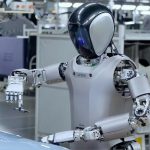
UBTech will send Walker S2 robots to serve on China's border for $37 million
Chinese company UBTech won a contract for $37 million. And will send humanoid robots Walker S2 to serve on China's border with Vietnam. South China Morning Post reports that the robots will interact with tourists and staff, perform logistics operations, inspect cargo and patrol the area. And characteristically — they can independently change their battery.

AI chatbots generate content that exacerbates eating disorders
A joint study by Stanford University and the Center for Democracy and Technology showed a disturbing picture. Chatbots with artificial intelligence pose a serious risk to people with eating disorders. Scientists warn that neural networks hand out harmful advice about diets. They suggest ways to hide the disorder and generate "inspiring weight loss content" that worsens the problem.

OpenAGI released the Lux model that overtakes Google and OpenAI
Startup OpenAGI released the Lux model for computer control and claims this is a breakthrough. According to benchmarks, the model overtakes analogues from Google, OpenAI and Anthropic by a whole generation. Moreover, it works faster. About 1 second per step instead of 3 seconds for competitors. And 10 times cheaper in cost per processing 1 token.