NEO robot from 1X works autonomously without internet on onboard GPU
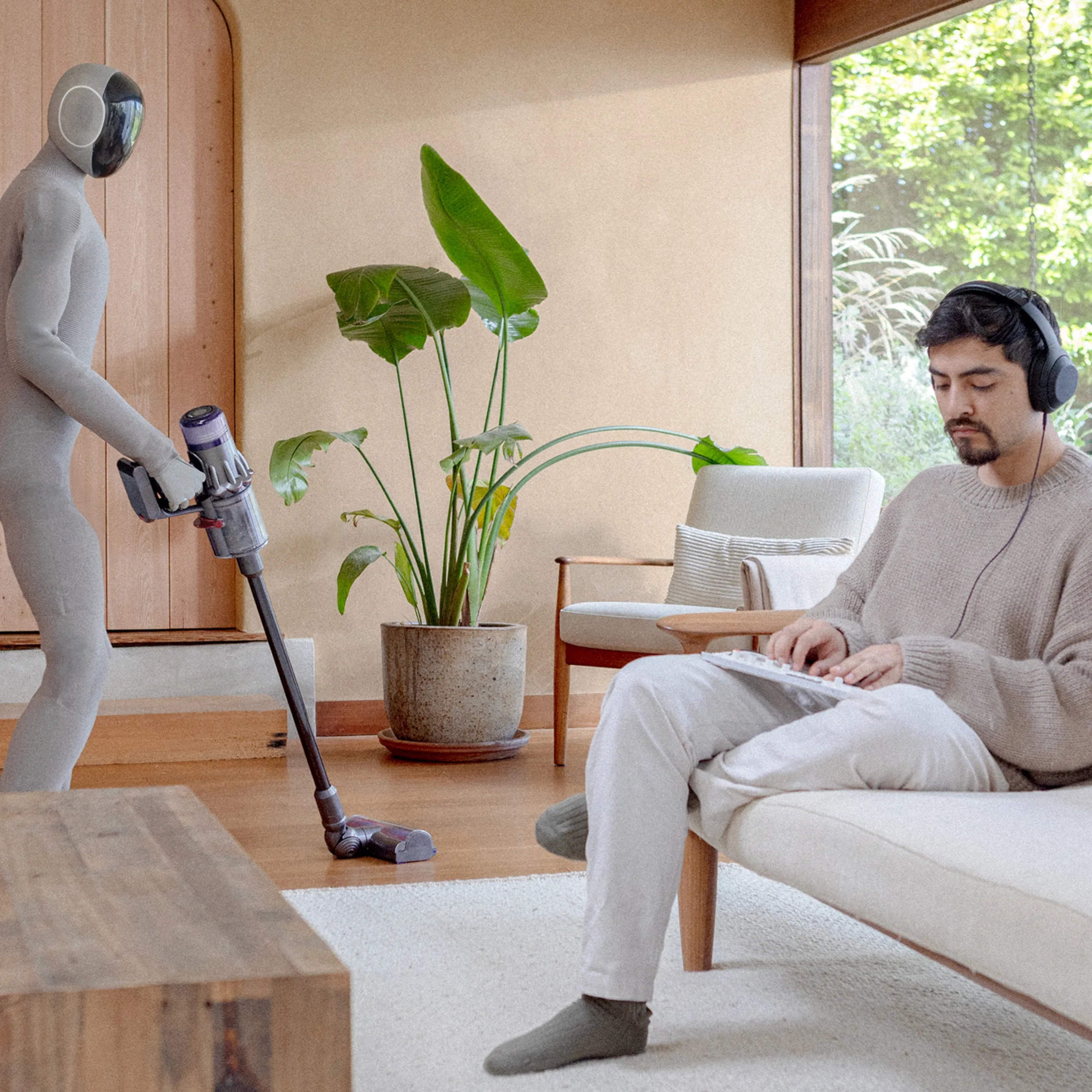
The humanoid robot NEO from 1X Technologies demonstrated cool capabilities that finally bring us closer to humanity’s long-standing dream of full-fledged household assistants.
The key innovation here is the intelligent Redwood system. Which completely rethinks the approach to robot control. This isn’t just another language model. But a complex autonomous system that unites perception of the surrounding world, movement and control of complex motions into a single whole.
What makes NEO truly breakthrough? Complete autonomy! All computational power of Redwood is implemented on the onboard graphics processor. Which provides the robot with real freedom of action without the need for constant cloud connection. Imagine: your household assistant continues working even in the basement, at the dacha or with unstable internet connection — continuing to perform your tasks regardless of external conditions.
Also impressive is the coordination of whole-body movements. NEO can synchronize the work of arms, legs, pelvis and torso to perform the most complex household tasks. It leans against surfaces for greater stability, opens doors, extracts needed items from cabinets, bypasses obstacles and even repeats attempts if it couldn’t grasp an object on the first try. All this in real, non-ideal conditions of an ordinary apartment.
AIvengo >
Reviews >
NEO robot from 1X works autonomously without internet on onboard GPU
Почитать из последнего
UBTech will send Walker S2 robots to serve on China's border for $37 million
Chinese company UBTech won a contract for $37 million. And will send humanoid robots Walker S2 to serve on China's border with Vietnam. South China Morning Post reports that the robots will interact with tourists and staff, perform logistics operations, inspect cargo and patrol the area. And characteristically — they can independently change their battery.
AI chatbots generate content that exacerbates eating disorders
A joint study by Stanford University and the Center for Democracy and Technology showed a disturbing picture. Chatbots with artificial intelligence pose a serious risk to people with eating disorders. Scientists warn that neural networks hand out harmful advice about diets. They suggest ways to hide the disorder and generate "inspiring weight loss content" that worsens the problem.
OpenAGI released the Lux model that overtakes Google and OpenAI
Startup OpenAGI released the Lux model for computer control and claims this is a breakthrough. According to benchmarks, the model overtakes analogues from Google, OpenAI and Anthropic by a whole generation. Moreover, it works faster. About 1 second per step instead of 3 seconds for competitors. And 10 times cheaper in cost per processing 1 token.