Nvidia introduced Cosmos model family for robotics

Nvidia company introduced the Cosmos family of AI models. Which can fundamentally change the approach to creating robots and physical AI agents.
At the center of this technological breakthrough is Cosmos Reason. This is a parametric “reasoning” model with 7 billion parameters. Which combines linguistic and visual capabilities for robotics. Imagine. Robots that don’t just execute commands, but truly “understand” the physical world and can plan sequences of actions based on this understanding.
The Cosmos ecosystem also added the Cosmos Transfer-2 model. It significantly accelerates the generation of synthetic data from 3D simulations. Which is critically important for training robots in virtual environments before their release into the real world. And the optimized “distilled” version Cosmos Transfers provides even greater operating speed.
AIvengo >
Reviews >
Nvidia introduced Cosmos model family for robotics
Почитать из последнего
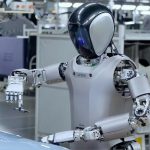
UBTech will send Walker S2 robots to serve on China's border for $37 million
Chinese company UBTech won a contract for $37 million. And will send humanoid robots Walker S2 to serve on China's border with Vietnam. South China Morning Post reports that the robots will interact with tourists and staff, perform logistics operations, inspect cargo and patrol the area. And characteristically — they can independently change their battery.

AI chatbots generate content that exacerbates eating disorders
A joint study by Stanford University and the Center for Democracy and Technology showed a disturbing picture. Chatbots with artificial intelligence pose a serious risk to people with eating disorders. Scientists warn that neural networks hand out harmful advice about diets. They suggest ways to hide the disorder and generate "inspiring weight loss content" that worsens the problem.

OpenAGI released the Lux model that overtakes Google and OpenAI
Startup OpenAGI released the Lux model for computer control and claims this is a breakthrough. According to benchmarks, the model overtakes analogues from Google, OpenAI and Anthropic by a whole generation. Moreover, it works faster. About 1 second per step instead of 3 seconds for competitors. And 10 times cheaper in cost per processing 1 token.