OpenAGI released the Lux model that overtakes Google and OpenAI

Post Thumbnail

Startup OpenAGI released the Lux model for computer control and claims this is a breakthrough. According to benchmarks, the model overtakes analogues from Google, OpenAI and Anthropic by a whole generation. Moreover, it works faster. About 1 second per step instead of 3 seconds for competitors. And 10 times cheaper in cost per processing 1 token.

How do you like the project name? OpenAI will be especially happy about OpenAGI!

The founders from MIT claim that the essence of success is that this is not a tuned large language model. But a system that was taught from the very beginning to precisely perform actions. That is, an absolutely different paradigm. They opened the infrastructure code in which they trained the agent, so you can dig around.

OpenAGI positions itself as an open research laboratory created by researchers from MIT, UIUC and CMU. They are building agentic models by rethinking pretraining, post-training and large-scale reinforcement learning. Their goal — to bring computers to the 4th era: a computer that thinks and acts for you.

And here an interesting question arises. Large corporations are trying to stretch language models onto computer control tasks. And a small team from MIT is going from the other end. Building a system sharpened for actions from the very beginning. It turns out that the old approach, where large language models plus additional tuning may be a dead end.

If OpenAGI is right, then we are observing a paradigm shift right now. Not improvement of existing models, but a fundamentally different approach to creating agents.

Почитать из последнего
UBTech will send Walker S2 robots to serve on China's border for $37 million
Chinese company UBTech won a contract for $37 million. And will send humanoid robots Walker S2 to serve on China's border with Vietnam. South China Morning Post reports that the robots will interact with tourists and staff, perform logistics operations, inspect cargo and patrol the area. And characteristically — they can independently change their battery.
Anthropic accidentally revealed an internal document about Claude's "soul"
Anthropic accidentally revealed the "soul" of artificial intelligence to a user. And this is not a metaphor. This is a quite specific internal document.
Jensen Huang ordered Nvidia employees to use AI everywhere
Jensen Huang announced total mobilization under the banner of artificial intelligence inside Nvidia. And this is no longer a recommendation. This is a requirement.
AI chatbots generate content that exacerbates eating disorders
A joint study by Stanford University and the Center for Democracy and Technology showed a disturbing picture. Chatbots with artificial intelligence pose a serious risk to people with eating disorders. Scientists warn that neural networks hand out harmful advice about diets. They suggest ways to hide the disorder and generate "inspiring weight loss content" that worsens the problem.
OpenAGI released the Lux model that overtakes Google and OpenAI
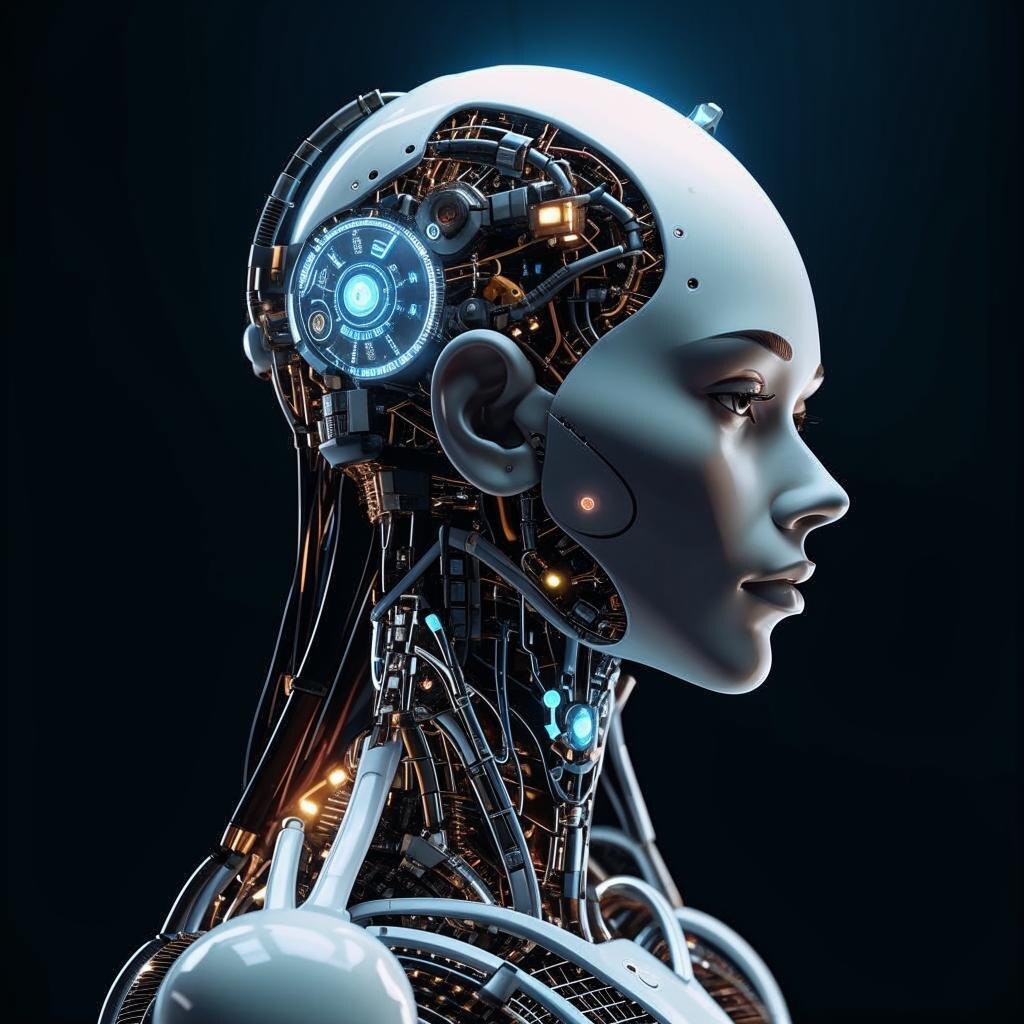
Startup OpenAGI released the Lux model for computer control and claims this is a breakthrough. According to benchmarks, the model overtakes analogues from Google, OpenAI and Anthropic by a whole generation. Moreover, it works faster. About 1 second per step instead of 3 seconds for competitors. And 10 times cheaper in cost per processing 1 token.