OpenAI and Jony Ive create screenless device

Post Thumbnail

New details have become known about the mysterious device being developed by OpenAI and former Apple chief designer Jony Ive. According to The Wall Street Journal, the new gadget will be pocket-sized, completely devoid of a screen, capable of analyzing the user’s context and environment, but is not augmented reality glasses.

On an internal call with employees, OpenAI CEO Sam Altman revealed key characteristics of the future product. The device will be inconspicuous in use, fully aware of the user’s life and environment. Altman positions it as a “3rd key device” that a person will place on the table next to their MacBook Pro and iPhone.

The company’s ambitions regarding the new product are impressive. Altman predicts that the device will become so popular that it will be “shipped faster than any company has ever shipped 100 million units of something new.” This speaks to expectations of unprecedented demand for a new product category.

The OpenAI CEO also emphasized the historic significance of the project for the company, telling employees: “We have a chance to do the biggest thing we’ve ever done as a company.” Such statements indicate that creating a physical device is viewed as the most important milestone in OpenAI’s development, potentially no less significant than the launch of ChatGPT.

The concept of a screenless device capable of understanding the user’s context and environment represents a radical departure from the familiar paradigm of interacting with technology. Instead of a visual interface, users will rely on voice communication and possibly other forms of interaction with artificial intelligence.

Почитать из последнего
UBTech will send Walker S2 robots to serve on China's border for $37 million
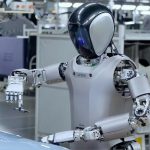
Chinese company UBTech won a contract for $37 million. And will send humanoid robots Walker S2 to serve on China's border with Vietnam. South China Morning Post reports that the robots will interact with tourists and staff, perform logistics operations, inspect cargo and patrol the area. And characteristically — they can independently change their battery.
Anthropic accidentally revealed an internal document about Claude's "soul"
Anthropic accidentally revealed the "soul" of artificial intelligence to a user. And this is not a metaphor. This is a quite specific internal document.
Jensen Huang ordered Nvidia employees to use AI everywhere
Jensen Huang announced total mobilization under the banner of artificial intelligence inside Nvidia. And this is no longer a recommendation. This is a requirement.
AI chatbots generate content that exacerbates eating disorders
A joint study by Stanford University and the Center for Democracy and Technology showed a disturbing picture. Chatbots with artificial intelligence pose a serious risk to people with eating disorders. Scientists warn that neural networks hand out harmful advice about diets. They suggest ways to hide the disorder and generate "inspiring weight loss content" that worsens the problem.
OpenAGI released the Lux model that overtakes Google and OpenAI
Startup OpenAGI released the Lux model for computer control and claims this is a breakthrough. According to benchmarks, the model overtakes analogues from Google, OpenAI and Anthropic by a whole generation. Moreover, it works faster. About 1 second per step instead of 3 seconds for competitors. And 10 times cheaper in cost per processing 1 token.