OpenAI prepares record investments and moves away from Microsoft

Post Thumbnail

OpenAI, a leading developer of artificial intelligence technologies, plans to radically change the structure of its computing power over the next five years, according to a report by The Information. The company intends to significantly reduce its dependence on its largest shareholder Microsoft in favor of a new strategic partner – SoftBank.

By 2030, OpenAI expects to receive 75% of its required computing power from the Stargate project, which will be financed by SoftBank, recently becoming one of the company’s key investors. This decision marks a radical departure from the current model, where Microsoft is the main provider of computing resources.

However, the transition will be gradual: in the coming years, OpenAI plans to even increase spending on the use of data centers owned by Microsoft. At the same time, the company’s total expenses are expected to grow on an unprecedented scale. According to The Information, in 2027, OpenAI forecasts expenses of $20 billion, which is four times the $5 billion spent by the company in 2024.

Particularly notable is that by 2030, OpenAI expects a significant change in its cost structure: expenses for operating already trained AI models (inference) will exceed the costs of training them. This indicates the AI industry’s transition to a new phase of development, where the main costs are associated not with development, but with the practical application of artificial intelligence technologies.

This strategic maneuver could significantly affect the balance of power in the AI industry, creating a new powerful alliance between OpenAI and SoftBank, capable of competing with Microsoft’s dominant position in cloud computing for artificial intelligence.

Почитать из последнего
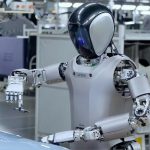
UBTech will send Walker S2 robots to serve on China's border for $37 million
Chinese company UBTech won a contract for $37 million. And will send humanoid robots Walker S2 to serve on China's border with Vietnam. South China Morning Post reports that the robots will interact with tourists and staff, perform logistics operations, inspect cargo and patrol the area. And characteristically — they can independently change their battery.
Anthropic accidentally revealed an internal document about Claude's "soul"
Anthropic accidentally revealed the "soul" of artificial intelligence to a user. And this is not a metaphor. This is a quite specific internal document.
Jensen Huang ordered Nvidia employees to use AI everywhere
Jensen Huang announced total mobilization under the banner of artificial intelligence inside Nvidia. And this is no longer a recommendation. This is a requirement.
AI chatbots generate content that exacerbates eating disorders
A joint study by Stanford University and the Center for Democracy and Technology showed a disturbing picture. Chatbots with artificial intelligence pose a serious risk to people with eating disorders. Scientists warn that neural networks hand out harmful advice about diets. They suggest ways to hide the disorder and generate "inspiring weight loss content" that worsens the problem.
OpenAGI released the Lux model that overtakes Google and OpenAI
Startup OpenAGI released the Lux model for computer control and claims this is a breakthrough. According to benchmarks, the model overtakes analogues from Google, OpenAI and Anthropic by a whole generation. Moreover, it works faster. About 1 second per step instead of 3 seconds for competitors. And 10 times cheaper in cost per processing 1 token.