OpenAI releases major GPT-4o update: what has changed

Post Thumbnail

OpenAI has released a significant update to its flagship GPT-4o model, substantially expanding its capabilities in image analysis, scientific data processing, and understanding of current context.

A key improvement was the extension of training data temporal coverage from November 2023 to June 2024. This enabled the model to provide more relevant and accurate responses, especially in matters relating to cultural and social trends, as well as recent scientific research. The updated knowledge base has also improved the model’s search query efficiency.

Substantial progress has been achieved in visual information analysis. GPT-4o demonstrates improved performance in MMMU and MathVista tests, reflecting the model’s increased ability to interpret spatial relationships, analyze complex diagrams, understand graphs, and connect visual content with textual descriptions.

Developers paid special attention to enhancing the model’s capabilities in STEM (Science, Technology, Engineering, and Mathematics). GPT-4o shows improved results in solving mathematical, scientific, and programming tasks, confirmed by increased scores in GPQA and MATH academic tests. The model also demonstrated performance growth in the comprehensive MMLU test, which evaluates language understanding, knowledge breadth, and reasoning ability.

An unexpected addition was the increased use of emoji in system responses. The model now more readily applies emotional symbols, especially if users themselves use them in conversation. This innovation aims to create more natural and emotionally rich communication with artificial intelligence.

Почитать из последнего
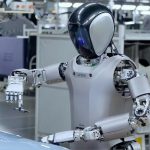
UBTech will send Walker S2 robots to serve on China's border for $37 million
Chinese company UBTech won a contract for $37 million. And will send humanoid robots Walker S2 to serve on China's border with Vietnam. South China Morning Post reports that the robots will interact with tourists and staff, perform logistics operations, inspect cargo and patrol the area. And characteristically — they can independently change their battery.
Anthropic accidentally revealed an internal document about Claude's "soul"
Anthropic accidentally revealed the "soul" of artificial intelligence to a user. And this is not a metaphor. This is a quite specific internal document.
Jensen Huang ordered Nvidia employees to use AI everywhere
Jensen Huang announced total mobilization under the banner of artificial intelligence inside Nvidia. And this is no longer a recommendation. This is a requirement.
AI chatbots generate content that exacerbates eating disorders
A joint study by Stanford University and the Center for Democracy and Technology showed a disturbing picture. Chatbots with artificial intelligence pose a serious risk to people with eating disorders. Scientists warn that neural networks hand out harmful advice about diets. They suggest ways to hide the disorder and generate "inspiring weight loss content" that worsens the problem.
OpenAGI released the Lux model that overtakes Google and OpenAI
Startup OpenAGI released the Lux model for computer control and claims this is a breakthrough. According to benchmarks, the model overtakes analogues from Google, OpenAI and Anthropic by a whole generation. Moreover, it works faster. About 1 second per step instead of 3 seconds for competitors. And 10 times cheaper in cost per processing 1 token.