Reuters investigated whether the AI boom is a bubble or a supercycle

Post Thumbnail

Bubble or supercycle? The strongest surge in volatility in months made investors talk about the AI bubble again. And at Reuters they tried to figure this out.

Even Nvidia’s record report on November 20 did not hold the indices. Against the background of strong chip demand figures, the company’s shares and the entire technology sector went into the red. S&P 500 and Nasdaq lost about 1.5-2% in a day. The first cracks in the rally that all year was pulled up by stories about artificial intelligence.

By classic indicators, the market is overheated. The “Buffett Indicator” — the ratio of US stock market capitalization to US GDP — exceeded 200%. Higher than the dotcom boom peak and the covid maximum of year 21. Reuters calls this a “zone of elevated risk”. Not necessarily a crash, but a level from which corrections become more likely.

The Nasdaq trajectory over 3 years after the release of ChatGPT resembles its trajectory after Netscape’s IPO in 1995. Strong growth on expectations of a new technological era.

But here’s the oddity. In investor surveys, the share of “bulls” is at an average level, not at overwhelming 70-75%, as before the dotcom crash. Reuters’ conclusion: if this is a bubble, it’s at an early stage.

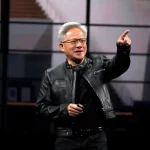
And here’s the main contradiction. Google CEO Sundar Pichai acknowledges elements of “irrationality” in the current race and warns: with a burst bubble “no company will stay on the sidelines”. And Nvidia head Jensen Huang insists there is no bubble. Supposedly we’re just experiencing a new wave of industrial transformation.

Почитать из последнего
UBTech will send Walker S2 robots to serve on China's border for $37 million
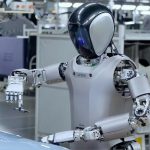
Chinese company UBTech won a contract for $37 million. And will send humanoid robots Walker S2 to serve on China's border with Vietnam. South China Morning Post reports that the robots will interact with tourists and staff, perform logistics operations, inspect cargo and patrol the area. And characteristically — they can independently change their battery.
Anthropic accidentally revealed an internal document about Claude's "soul"
Anthropic accidentally revealed the "soul" of artificial intelligence to a user. And this is not a metaphor. This is a quite specific internal document.
Jensen Huang ordered Nvidia employees to use AI everywhere
Jensen Huang announced total mobilization under the banner of artificial intelligence inside Nvidia. And this is no longer a recommendation. This is a requirement.
AI chatbots generate content that exacerbates eating disorders
A joint study by Stanford University and the Center for Democracy and Technology showed a disturbing picture. Chatbots with artificial intelligence pose a serious risk to people with eating disorders. Scientists warn that neural networks hand out harmful advice about diets. They suggest ways to hide the disorder and generate "inspiring weight loss content" that worsens the problem.
OpenAGI released the Lux model that overtakes Google and OpenAI
Startup OpenAGI released the Lux model for computer control and claims this is a breakthrough. According to benchmarks, the model overtakes analogues from Google, OpenAI and Anthropic by a whole generation. Moreover, it works faster. About 1 second per step instead of 3 seconds for competitors. And 10 times cheaper in cost per processing 1 token.