Risk transfer from human to machine: new concept from Ghost Robotics
Post Thumbnail

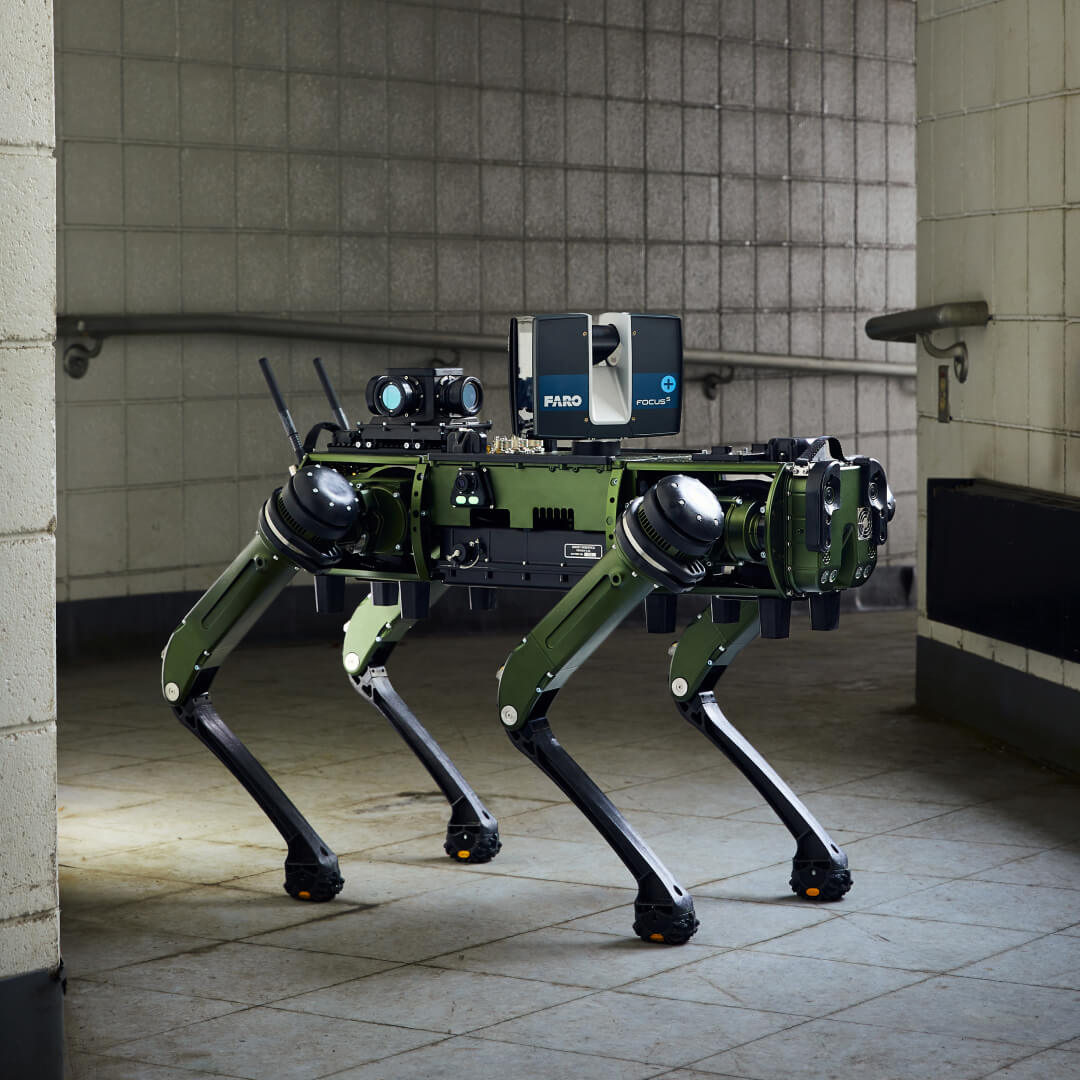
Ghost Robotics has developed the Vision 60 robot. It is an all-weather platform created for operation in unstructured environments. Where traditional wheeled or tracked systems prove ineffective. Technical superiority is achieved through a patented “blind mode” control system. Mimicking mammalian movement principles and ensuring stability even with degradation of optical sensors.

During the Noto earthquake in 24, Japanese self-defense forces used these robots for reconnaissance of evacuation routes and support for the movement of the most vulnerable residents. And Canadian nuclear laboratories equipped robots with sensors for mapping radiation levels, preventing the need to put humans at risk.

There is also military application of quadruped robots and this raises ethical questions. Unlike some manufacturers who issued an open letter against arming “general purpose robots,” Ghost Robotics takes a more pragmatic position. The company believes that regulation should be carried out through carefully formulated government rules. Not through ambiguous corporate promises.

It turns out that Ghost Robotics quadruped robots represent a technological implementation of the principle of transferring risk from human to machine. Which significantly changes the concept of conducting rescue operations and military missions in dangerous zones. At the same time creating a need for a new ethical and legal framework for regulating such systems.

Почитать из последнего
UBTech will send Walker S2 robots to serve on China's border for $37 million
Chinese company UBTech won a contract for $37 million. And will send humanoid robots Walker S2 to serve on China's border with Vietnam. South China Morning Post reports that the robots will interact with tourists and staff, perform logistics operations, inspect cargo and patrol the area. And characteristically — they can independently change their battery.
Anthropic accidentally revealed an internal document about Claude's "soul"
Anthropic accidentally revealed the "soul" of artificial intelligence to a user. And this is not a metaphor. This is a quite specific internal document.
Jensen Huang ordered Nvidia employees to use AI everywhere
Jensen Huang announced total mobilization under the banner of artificial intelligence inside Nvidia. And this is no longer a recommendation. This is a requirement.
AI chatbots generate content that exacerbates eating disorders
A joint study by Stanford University and the Center for Democracy and Technology showed a disturbing picture. Chatbots with artificial intelligence pose a serious risk to people with eating disorders. Scientists warn that neural networks hand out harmful advice about diets. They suggest ways to hide the disorder and generate "inspiring weight loss content" that worsens the problem.
OpenAGI released the Lux model that overtakes Google and OpenAI
Startup OpenAGI released the Lux model for computer control and claims this is a breakthrough. According to benchmarks, the model overtakes analogues from Google, OpenAI and Anthropic by a whole generation. Moreover, it works faster. About 1 second per step instead of 3 seconds for competitors. And 10 times cheaper in cost per processing 1 token.