Robots’ arms started falling off due to drive load
Post Thumbnail

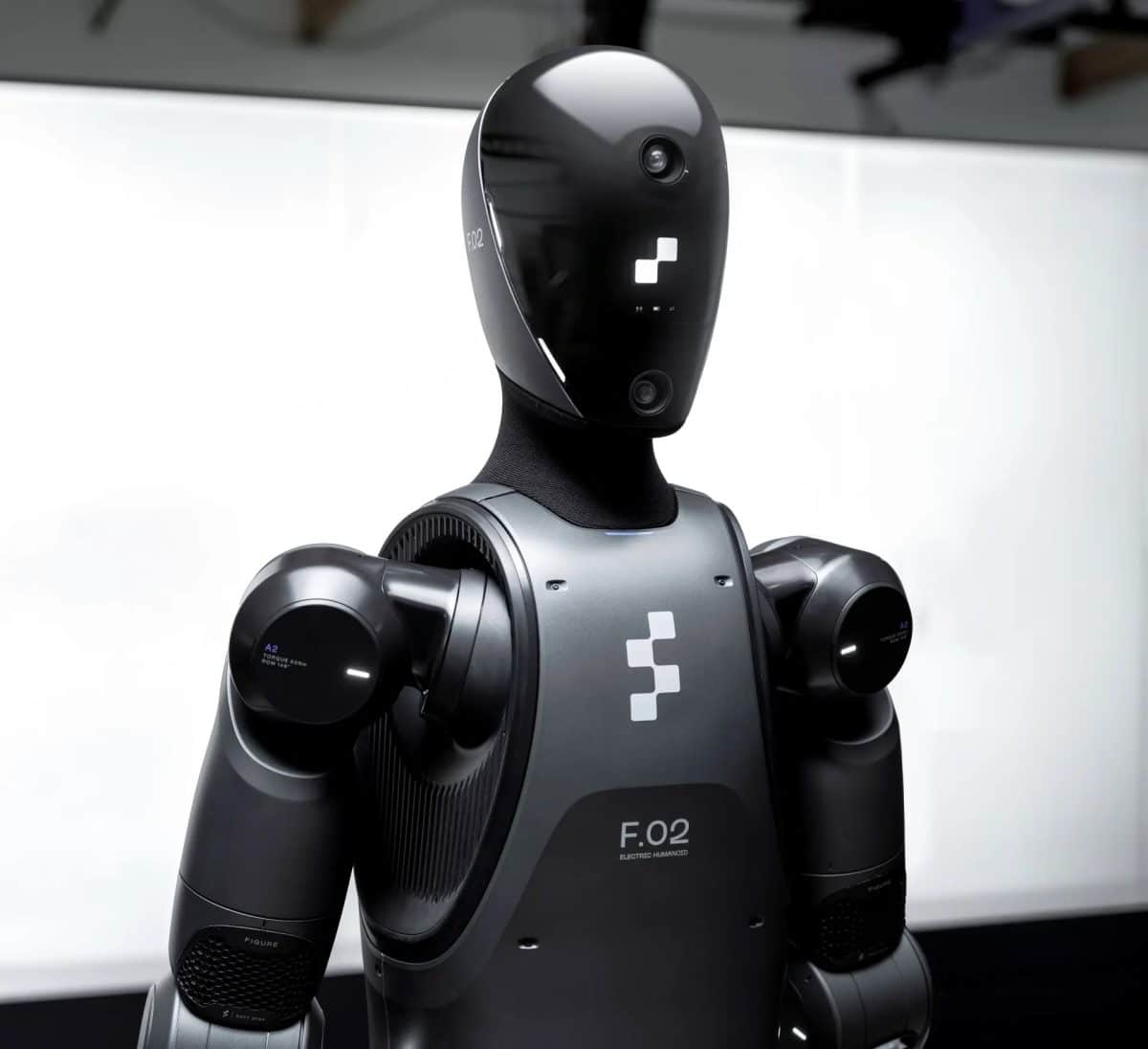
Company Figure AI completed nearly year-long tests of humanoid robots Figure 02 at a real BMW plant. The robots worked Monday through Friday in 10-hour shifts.

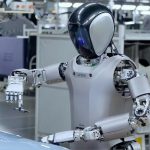
Since January this year, 5th generation robots worked on a real assembly line, performing the operation of inserting sheet metal blanks into welding fixtures for BMW X3 body. During operation, a park of several robots helped assemble over 30 thousand cars. Processing over 90 thousand parts through their hands and walking about 320 km through the shop.

For each operation of installing a blank for welding, one robot took 84 seconds. Operation execution accuracy with 5-millimeter tolerance exceeded 99%. During the experiment, robots worked over 1250 hours in harsh industrial conditions.

And then problems began. Frequent breaks of forearms started due to load on cables and manipulator drives. Arms literally started falling off.

But company Figure AI proudly showed scratched bodies, palms and other body parts of robots that replaced humans in one of the uncomfortable manual operations.

And made the decision to retire the entire park of Figure 02 generation models. Essentially sending the robots to retirement. And started planned transition to the next generation of models. Figure 03.

It turns out, overall tests showed that even first generations of humanoids can work in real factory conditions.

Почитать из последнего
UBTech will send Walker S2 robots to serve on China's border for $37 million
Chinese company UBTech won a contract for $37 million. And will send humanoid robots Walker S2 to serve on China's border with Vietnam. South China Morning Post reports that the robots will interact with tourists and staff, perform logistics operations, inspect cargo and patrol the area. And characteristically — they can independently change their battery.
Anthropic accidentally revealed an internal document about Claude's "soul"
Anthropic accidentally revealed the "soul" of artificial intelligence to a user. And this is not a metaphor. This is a quite specific internal document.
Jensen Huang ordered Nvidia employees to use AI everywhere
Jensen Huang announced total mobilization under the banner of artificial intelligence inside Nvidia. And this is no longer a recommendation. This is a requirement.
AI chatbots generate content that exacerbates eating disorders
A joint study by Stanford University and the Center for Democracy and Technology showed a disturbing picture. Chatbots with artificial intelligence pose a serious risk to people with eating disorders. Scientists warn that neural networks hand out harmful advice about diets. They suggest ways to hide the disorder and generate "inspiring weight loss content" that worsens the problem.
OpenAGI released the Lux model that overtakes Google and OpenAI
Startup OpenAGI released the Lux model for computer control and claims this is a breakthrough. According to benchmarks, the model overtakes analogues from Google, OpenAI and Anthropic by a whole generation. Moreover, it works faster. About 1 second per step instead of 3 seconds for competitors. And 10 times cheaper in cost per processing 1 token.