Scientists discover new AI phenomenon – “indoor training effect”

Researchers from Massachusetts Institute of Technology (MIT) and other scientific centers made an unexpected discovery in AI training that contradicts conventional approaches to training AI agents.
Scientists discovered a phenomenon they named the “indoor training effect”. Contrary to the traditional view that simulated training environments should precisely match real operating conditions, the research showed: training in a completely different, more predictable environment can lead to better results.
“If we learn to play tennis indoors where there’s no noise, we can more easily master different shots. Then, moving to a noisier environment, like a windy court, we might have a higher chance of playing well than if we had started training in windy conditions,” explains Serena Bono, MIT Media Lab researcher and lead author of the study.
To test their theory, researchers used Atari games modified to include an element of unpredictability. Specifically, they experimented with Pac-Man, altering ghost movement probabilities. The results were unexpected: an AI agent trained in a noise-free version of the game showed better results in a “noisy” environment than an agent trained with interference.
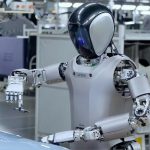
This discovery is particularly important for home robotics development. Traditionally, it was thought that a robot trained to perform household tasks in a factory might work inefficiently in a user’s kitchen due to environmental differences. The new research offers a fundamentally different approach to solving this problem.
“This is a completely new perspective on the problem. Instead of trying to make the training environment as similar as possible to the test environment, we can create simulated environments where the AI agent learns even better,” notes study co-author Spandan Madan, a Harvard University graduate student.