Students turned Unitree Go 2 into Thunder Paws robodog
Post Thumbnail

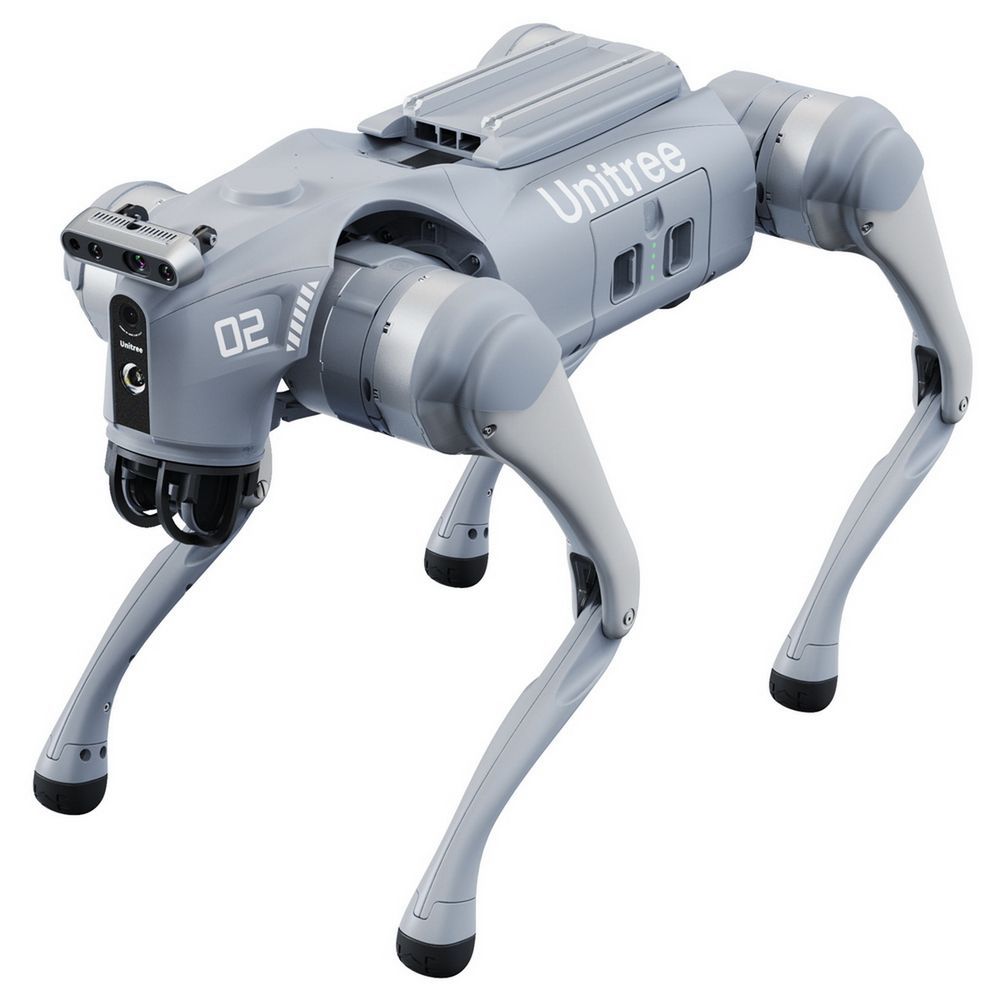
Students at Collins College at St. John’s University in the USA created an unusual robot named Thunder Paws, which became a real star of the campus. The project is based on the Unitree Go 2 quadruped, which the students completely transformed. Turning a standard robot into an interactive companion capable of performing tricks like a real dog.

The main feature of Thunder Paws is that it doesn’t just move around, but can perform a whole set of “dog” tricks. Sit on command, run, and even roll over on its back. All this became possible thanks to deep integration of artificial intelligence and complete reprogramming of the device by students.

The robodog is controlled through a special smartphone app or with a gamepad, making interaction with it intuitively understandable. Additionally, the developers equipped Thunder Paws with a special companion mode, allowing the robot to accompany a person and react to their actions.

Thunder Paws’ debut took place at the ceremonial send-off of the university’s Red Storm basketball team to the championship. The robot demonstrated its capabilities to the public, running up to people, following them, and performing various tricks to audience applause. The project went beyond ordinary laboratory work and became a real showcase of students’ engineering mastery.

It’s cool that students took the commercially available Unitree Go 2 robotic platform and significantly expanded its functionality, adding companion mode, the ability to perform tricks, and intuitive control through an app. And the result was such an interesting social robot.
Почитать из последнего
UBTech will send Walker S2 robots to serve on China's border for $37 million
Chinese company UBTech won a contract for $37 million. And will send humanoid robots Walker S2 to serve on China's border with Vietnam. South China Morning Post reports that the robots will interact with tourists and staff, perform logistics operations, inspect cargo and patrol the area. And characteristically — they can independently change their battery.
Anthropic accidentally revealed an internal document about Claude's "soul"
Anthropic accidentally revealed the "soul" of artificial intelligence to a user. And this is not a metaphor. This is a quite specific internal document.
Jensen Huang ordered Nvidia employees to use AI everywhere
Jensen Huang announced total mobilization under the banner of artificial intelligence inside Nvidia. And this is no longer a recommendation. This is a requirement.
AI chatbots generate content that exacerbates eating disorders
A joint study by Stanford University and the Center for Democracy and Technology showed a disturbing picture. Chatbots with artificial intelligence pose a serious risk to people with eating disorders. Scientists warn that neural networks hand out harmful advice about diets. They suggest ways to hide the disorder and generate "inspiring weight loss content" that worsens the problem.
OpenAGI released the Lux model that overtakes Google and OpenAI
Startup OpenAGI released the Lux model for computer control and claims this is a breakthrough. According to benchmarks, the model overtakes analogues from Google, OpenAI and Anthropic by a whole generation. Moreover, it works faster. About 1 second per step instead of 3 seconds for competitors. And 10 times cheaper in cost per processing 1 token.