Tenniix created an AI tennis coach with ball serving at a speed of 120 km/h
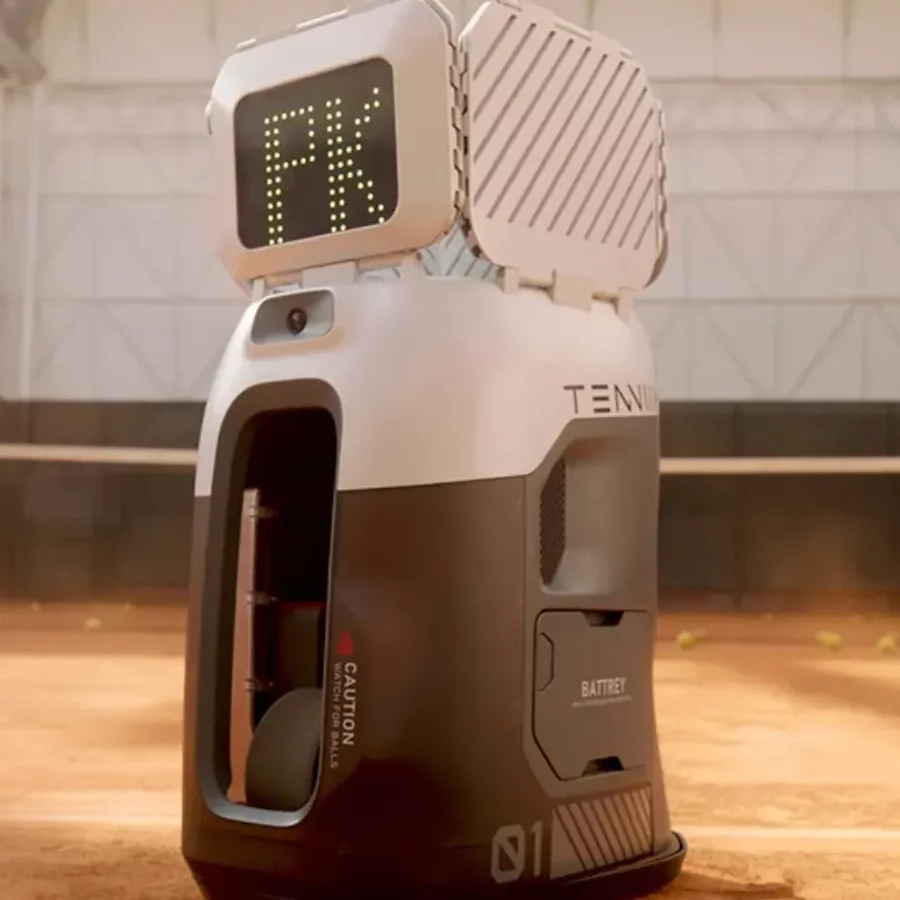
Tenniix company presented the world’s first robotic tennis coach with integrated artificial intelligence. Capable of not just performing mechanical functions, but fully participating in the athlete’s training.
The technical profile of the device goes far beyond existing training machines. The robot demonstrates the ability to serve balls at speeds up to 120 kilometers per hour, covering the entire area of the playing space thanks to a 360-degree movable base and a vertical installation with gyrostabilization. The engineering solution allows for imitating the full spectrum of tennis shots – from aggressive serves from the baseline to technically complex lobs.
The fundamental difference from analogues lies in the integration of artificial intelligence with a hybrid tracking system based on cameras and ultra-wideband sensors. This combination creates a continuous feedback loop. The robot registers the athlete’s movements, analyzes their technique, and adapts the training program in real-time. A library of more than 1000 individual training programs allows for customizing the process to the specific needs of a player of any level.
The interaction interface is implemented through a wrist control panel with a voice interface, which frees the athlete from the need to interrupt training to adjust parameters. The practical autonomy of the device is provided by a battery that supports operation for 4 hours and the execution of up to 4000 serves on a single charge. With a weight of only 7 kilograms, the robot has mobility unavailable to traditional training machines. I am pleasantly shocked! I’m waiting for a fully autonomous opponent to appear. With whom one can fully play for hours at a time convenient for you.