Tesla robotaxi failure: 11 traffic violations in first days from 20 cars

The dream of robotaxis faces harsh reality! Tesla launched public tests of autonomous taxis in Austin, but the results were far from the promised technological miracle. In the first days of testing, at least 11 serious traffic violations were recorded. And this with only 20 vehicles selected for a limited circle of bloggers. Philip Koopman, professor at Carnegie Mellon University and expert on autonomous technologies, doesn’t hide his surprise: “This is terribly fast for so many videos with unstable driving to appear”.
For Elon Musk this is a serious blow, since he has repeatedly linked the company’s financial future precisely to autonomous driving technology. Especially against the backdrop of declining electric vehicle sales. Austin city authorities and the National Highway Traffic Safety Administration have already requested official comments from Tesla.
Cameras captured a whole bouquet of dangerous maneuvers. Driving into oncoming traffic lanes, sudden braking, inadequate reaction to police cars, speeding. And even dropping off passengers in the middle of a multi-lane road! The situation is only saved by operators present in the cabin who intervene at critical moments.
AIvengo >
Reviews >
Tesla robotaxi failure: 11 traffic violations in first days from 20 cars
Почитать из последнего
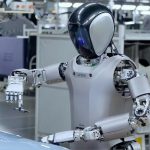
UBTech will send Walker S2 robots to serve on China's border for $37 million
Chinese company UBTech won a contract for $37 million. And will send humanoid robots Walker S2 to serve on China's border with Vietnam. South China Morning Post reports that the robots will interact with tourists and staff, perform logistics operations, inspect cargo and patrol the area. And characteristically — they can independently change their battery.
AI chatbots generate content that exacerbates eating disorders
A joint study by Stanford University and the Center for Democracy and Technology showed a disturbing picture. Chatbots with artificial intelligence pose a serious risk to people with eating disorders. Scientists warn that neural networks hand out harmful advice about diets. They suggest ways to hide the disorder and generate "inspiring weight loss content" that worsens the problem.

OpenAGI released the Lux model that overtakes Google and OpenAI
Startup OpenAGI released the Lux model for computer control and claims this is a breakthrough. According to benchmarks, the model overtakes analogues from Google, OpenAI and Anthropic by a whole generation. Moreover, it works faster. About 1 second per step instead of 3 seconds for competitors. And 10 times cheaper in cost per processing 1 token.