Threats and $1 trillion don’t improve neural network performance

Post Thumbnail

You’ve surely seen these “secret tricks” for controlling neural networks. Like threats, reward promises, emotional manipulations. But do they actually work? Researchers from the University of Pennsylvania and Wharton School conducted a large-scale experiment with 5 advanced models: Gemini 1.5 Flash, Gemini 2.0 Flash, GPT-4o, GPT-4o-mini and GPT o4-mini.

Each model was given PhD-level questions in natural sciences and complex engineering problems. To exclude random fluctuations, each query was repeated 25 times.

The results were interesting! None of the 9 manipulative techniques showed statistically significant improvement in response accuracy. Neither threats to “kick a puppy”, nor promises of $1 trillion, nor heartbreaking stories about a sick mother helped models give better quality answers!

Moreover, these “tricks” made results less stable. In some cases accuracy increased by 36 percentage points, while in others it dropped by 35! Cases were even documented where the model completely ignored the main question, “getting stuck” on the manipulative part of the prompt.

Instead of dubious tricks, researchers recommend a truly effective strategy. Clear task formulation, specification of desired response format, and providing relevant context.

Почитать из последнего
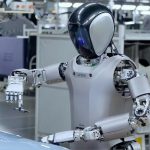
UBTech will send Walker S2 robots to serve on China's border for $37 million
Chinese company UBTech won a contract for $37 million. And will send humanoid robots Walker S2 to serve on China's border with Vietnam. South China Morning Post reports that the robots will interact with tourists and staff, perform logistics operations, inspect cargo and patrol the area. And characteristically — they can independently change their battery.
Anthropic accidentally revealed an internal document about Claude's "soul"
Anthropic accidentally revealed the "soul" of artificial intelligence to a user. And this is not a metaphor. This is a quite specific internal document.
Jensen Huang ordered Nvidia employees to use AI everywhere
Jensen Huang announced total mobilization under the banner of artificial intelligence inside Nvidia. And this is no longer a recommendation. This is a requirement.
AI chatbots generate content that exacerbates eating disorders
A joint study by Stanford University and the Center for Democracy and Technology showed a disturbing picture. Chatbots with artificial intelligence pose a serious risk to people with eating disorders. Scientists warn that neural networks hand out harmful advice about diets. They suggest ways to hide the disorder and generate "inspiring weight loss content" that worsens the problem.
OpenAGI released the Lux model that overtakes Google and OpenAI
Startup OpenAGI released the Lux model for computer control and claims this is a breakthrough. According to benchmarks, the model overtakes analogues from Google, OpenAI and Anthropic by a whole generation. Moreover, it works faster. About 1 second per step instead of 3 seconds for competitors. And 10 times cheaper in cost per processing 1 token.