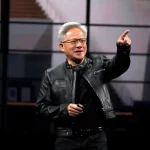
Top executives from OpenAI, Meta and Palantir became army lieutenant colonels

Three top executives from leading artificial intelligence companies received the rank of lieutenant colonel in the U.S. Army. These people will also head a special unit “Unit 201”. Among them are Palantir CTO Shyam Sankar, Meta CTO Andrew Bosworth and OpenAI Product Director Kevin Weil.
Army Chief of Staff’s chief press secretary Colonel Dave Butler stated that this is necessary for urgent technological transformation of the U.S. armed forces.
“Unit 201” was created to attract leaders from the technology world. They will help with personnel – attract and train people with technological experience. This is part of the Trump administration’s course on cooperation with technology companies. The government is already working with Palantir and Anduril, and candidate for deputy army secretary Michael Obadal works at Anduril.
Their task is strategic advice and work on individual projects to accelerate army development. As Butler noted, previously the best specialists were drafted during war, and now this is done in advance. Only one thing is unclear to me. Does this mean that top managers of these companies now report directly to their army superiors?
AIvengo >
Reviews >
Top executives from OpenAI, Meta and Palantir became army lieutenant colonels
Почитать из последнего
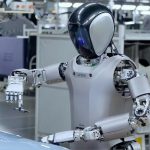
UBTech will send Walker S2 robots to serve on China's border for $37 million
Chinese company UBTech won a contract for $37 million. And will send humanoid robots Walker S2 to serve on China's border with Vietnam. South China Morning Post reports that the robots will interact with tourists and staff, perform logistics operations, inspect cargo and patrol the area. And characteristically — they can independently change their battery.
AI chatbots generate content that exacerbates eating disorders
A joint study by Stanford University and the Center for Democracy and Technology showed a disturbing picture. Chatbots with artificial intelligence pose a serious risk to people with eating disorders. Scientists warn that neural networks hand out harmful advice about diets. They suggest ways to hide the disorder and generate "inspiring weight loss content" that worsens the problem.
OpenAGI released the Lux model that overtakes Google and OpenAI
Startup OpenAGI released the Lux model for computer control and claims this is a breakthrough. According to benchmarks, the model overtakes analogues from Google, OpenAI and Anthropic by a whole generation. Moreover, it works faster. About 1 second per step instead of 3 seconds for competitors. And 10 times cheaper in cost per processing 1 token.