US demands stakes in TSMC, Samsung and Intel
Post Thumbnail

The US is launching an unprecedented scheme of partial nationalization of the semiconductor industry! Authorities want to get stakes in TSMC, Samsung, Micron and Intel in exchange for billion-dollar subsidies. This fundamentally changes the rules of the game in the global technology race.

US Commerce Secretary Howard Lutnick is promoting an unprecedented idea. He proposes transforming government subsidies into company shares. Under the previous administration, money was distributed for free. Now the state wants to become co-owner of key chip manufacturers.

Here are the scales of planned deals. Samsung was supposed to receive $4 billion in subsidies. Micron — $6 billion. TSMC — $6 billion. And Intel is already negotiating transferring 10% of shares to the state. Since the main part of the money hasn’t been transferred yet, conditions can be changed.

White House Press Secretary Caroline Levitt called this idea creative and unprecedented. Indeed, there has never been anything like this in American industrial history. The state becomes a shareholder of technology giants not in crisis, but as part of strategic development.

US Commerce Secretary Howard Lutnick emphasized that the state doesn’t intend to dictate working conditions. But the state is no longer just a sponsor. It becomes a co-owner.

What is presented as a “creative idea” is actually quiet nationalization of a strategic industry. Control over chip production — this is control over the future of artificial intelligence. By getting stakes in companies, the US creates an influence mechanism and will control semiconductor supplies worldwide. Global ambitions.
Почитать из последнего
UBTech will send Walker S2 robots to serve on China's border for $37 million
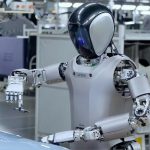
Chinese company UBTech won a contract for $37 million. And will send humanoid robots Walker S2 to serve on China's border with Vietnam. South China Morning Post reports that the robots will interact with tourists and staff, perform logistics operations, inspect cargo and patrol the area. And characteristically — they can independently change their battery.
Anthropic accidentally revealed an internal document about Claude's "soul"
Anthropic accidentally revealed the "soul" of artificial intelligence to a user. And this is not a metaphor. This is a quite specific internal document.
Jensen Huang ordered Nvidia employees to use AI everywhere
Jensen Huang announced total mobilization under the banner of artificial intelligence inside Nvidia. And this is no longer a recommendation. This is a requirement.
AI chatbots generate content that exacerbates eating disorders
A joint study by Stanford University and the Center for Democracy and Technology showed a disturbing picture. Chatbots with artificial intelligence pose a serious risk to people with eating disorders. Scientists warn that neural networks hand out harmful advice about diets. They suggest ways to hide the disorder and generate "inspiring weight loss content" that worsens the problem.
OpenAGI released the Lux model that overtakes Google and OpenAI
Startup OpenAGI released the Lux model for computer control and claims this is a breakthrough. According to benchmarks, the model overtakes analogues from Google, OpenAI and Anthropic by a whole generation. Moreover, it works faster. About 1 second per step instead of 3 seconds for competitors. And 10 times cheaper in cost per processing 1 token.