White House accuses DeepSeek of copying OpenAI technologies

Post Thumbnail

A major scandal erupted around Chinese company DeepSeek following a statement by David Sacks, White House’s chief AI advisor. According to him, there is “substantial evidence” that the Chinese developer used OpenAI technologies to create their new model.

In a Fox News interview, Sacks revealed a technique known as distillation, where one AI model uses another model’s outputs for training and developing similar capabilities. “There is substantial evidence that DeepSeek applied knowledge distillation from OpenAI models, and I think OpenAI is not at all happy about this,” said the advisor, without disclosing specific details.

The situation escalated after DeepSeek presented its new open-source model R1, capable of imitating human thinking. The company claimed that R1 not only matches leading American developments across several industry metrics but surpasses them, while development costs were significantly lower.

Notably, OpenAI CEO Sam Altman has already begun an internal investigation to determine whether DeepSeek’s successes are indeed related to OpenAI models’ distillation rather than being the result of an independent technological breakthrough.

Despite criticism, Sacks acknowledged DeepSeek’s achievement in creating a more efficient model without using many advanced GPUs. However, he warned that the buzz around the Chinese company would push American AI developers to take measures preventing distillation to slow down the emergence of so-called “copying” models.

OpenAI is currently refraining from official comments about the situation, which only fuels the tech community’s interest in the unfolding confrontation between American and Chinese artificial intelligence developers.

Почитать из последнего
UBTech will send Walker S2 robots to serve on China's border for $37 million
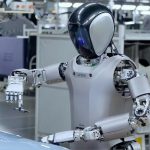
Chinese company UBTech won a contract for $37 million. And will send humanoid robots Walker S2 to serve on China's border with Vietnam. South China Morning Post reports that the robots will interact with tourists and staff, perform logistics operations, inspect cargo and patrol the area. And characteristically — they can independently change their battery.
Anthropic accidentally revealed an internal document about Claude's "soul"
Anthropic accidentally revealed the "soul" of artificial intelligence to a user. And this is not a metaphor. This is a quite specific internal document.
Jensen Huang ordered Nvidia employees to use AI everywhere
Jensen Huang announced total mobilization under the banner of artificial intelligence inside Nvidia. And this is no longer a recommendation. This is a requirement.
AI chatbots generate content that exacerbates eating disorders
A joint study by Stanford University and the Center for Democracy and Technology showed a disturbing picture. Chatbots with artificial intelligence pose a serious risk to people with eating disorders. Scientists warn that neural networks hand out harmful advice about diets. They suggest ways to hide the disorder and generate "inspiring weight loss content" that worsens the problem.
OpenAGI released the Lux model that overtakes Google and OpenAI
Startup OpenAGI released the Lux model for computer control and claims this is a breakthrough. According to benchmarks, the model overtakes analogues from Google, OpenAI and Anthropic by a whole generation. Moreover, it works faster. About 1 second per step instead of 3 seconds for competitors. And 10 times cheaper in cost per processing 1 token.