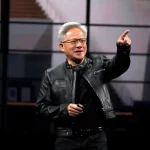
Zuckerberg poached CEO of Safe Superintelligence after Sutskever’s refusal

Mark Zuckerberg has launched a large-scale campaign to attract key specialists in artificial intelligence. And for this he uses different methods.
After investing 14 billion dollars in Scale AI and poaching its founder Alexander Wang, the Meta head targeted the company Safe Superintelligence. This startup, which former OpenAI technical director Ilya Sutskever founded just a year ago. And which is currently valued at 32 billion dollars.
The attempt to acquire the company entirely was not successful – Sutskever declined the offer. Then Zuckerberg instantly changed tactics and began negotiations with Safe Superintelligence CEO Daniel Gross, who together with former GitHub head Nat Friedman manages the venture fund NFDG.
As a result, Gross and Friedman are joining the Meta team and will work on products under the leadership of recently hired Wang from Scale AI. Simultaneously, Zuckerberg receives a share in their venture fund, opening access to a flow of promising projects at early stages. As well as to their insider information.
AIvengo >
Reviews >
Zuckerberg poached CEO of Safe Superintelligence after Sutskever’s refusal
Почитать из последнего

UBTech will send Walker S2 robots to serve on China's border for $37 million
Chinese company UBTech won a contract for $37 million. And will send humanoid robots Walker S2 to serve on China's border with Vietnam. South China Morning Post reports that the robots will interact with tourists and staff, perform logistics operations, inspect cargo and patrol the area. And characteristically — they can independently change their battery.

AI chatbots generate content that exacerbates eating disorders
A joint study by Stanford University and the Center for Democracy and Technology showed a disturbing picture. Chatbots with artificial intelligence pose a serious risk to people with eating disorders. Scientists warn that neural networks hand out harmful advice about diets. They suggest ways to hide the disorder and generate "inspiring weight loss content" that worsens the problem.

OpenAGI released the Lux model that overtakes Google and OpenAI
Startup OpenAGI released the Lux model for computer control and claims this is a breakthrough. According to benchmarks, the model overtakes analogues from Google, OpenAI and Anthropic by a whole generation. Moreover, it works faster. About 1 second per step instead of 3 seconds for competitors. And 10 times cheaper in cost per processing 1 token.