Musk Admits Tesla’s Full Self-Driving Claims Are Wrong
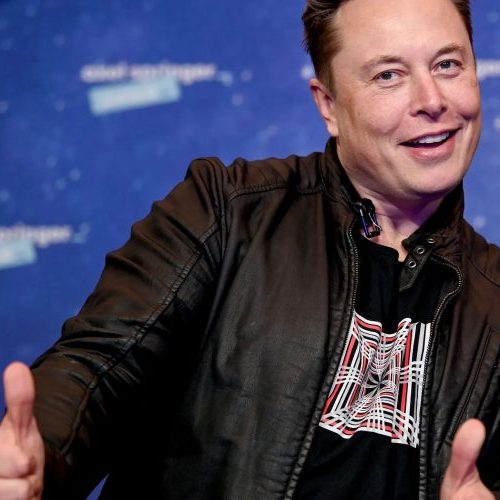
Elon Musk has admitted that Tesla will have to upgrade the computers in its Hardware 3 cars built between 2019 and 2023 to support fully self-driving. “The honest answer is that we’re going to have to upgrade the Hardware 3 computers of those who bought Full Self-Driving. It’s going to be painful and difficult, but we’re going to do it,” Musk said.
The admission contradicts the company’s 2016 claim that every Tesla built had the hardware to support fully self-driving. That promise, since removed from Tesla’s website, has kept the company’s valuation high for years.
After ending its partnership with Mobileye, the supplier of the first Autopilot computers, Tesla rolled out its own Hardware 2.0 solution, then Hardware 2.5. When Hardware 3 arrived in 2019, owners of older versions had to upgrade their computers to use supervised Full Self-Driving.
Tesla initially charged for the upgrade until one owner won a lawsuit where a judge ruled the 2016 promises were “false advertising” and ordered the upgrades to be provided for free.
This isn’t the first time Musk has failed to deliver on his promises to release fully autonomous Tesla vehicles.
AIvengo >
Reviews >
Musk Admits Tesla’s Full Self-Driving Claims Are Wrong
Почитать из последнего
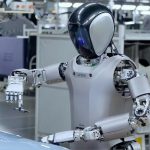
UBTech will send Walker S2 robots to serve on China's border for $37 million
Chinese company UBTech won a contract for $37 million. And will send humanoid robots Walker S2 to serve on China's border with Vietnam. South China Morning Post reports that the robots will interact with tourists and staff, perform logistics operations, inspect cargo and patrol the area. And characteristically — they can independently change their battery.
AI chatbots generate content that exacerbates eating disorders
A joint study by Stanford University and the Center for Democracy and Technology showed a disturbing picture. Chatbots with artificial intelligence pose a serious risk to people with eating disorders. Scientists warn that neural networks hand out harmful advice about diets. They suggest ways to hide the disorder and generate "inspiring weight loss content" that worsens the problem.
OpenAGI released the Lux model that overtakes Google and OpenAI
Startup OpenAGI released the Lux model for computer control and claims this is a breakthrough. According to benchmarks, the model overtakes analogues from Google, OpenAI and Anthropic by a whole generation. Moreover, it works faster. About 1 second per step instead of 3 seconds for competitors. And 10 times cheaper in cost per processing 1 token.