Starcloud launches AI satellite in November for data center in space
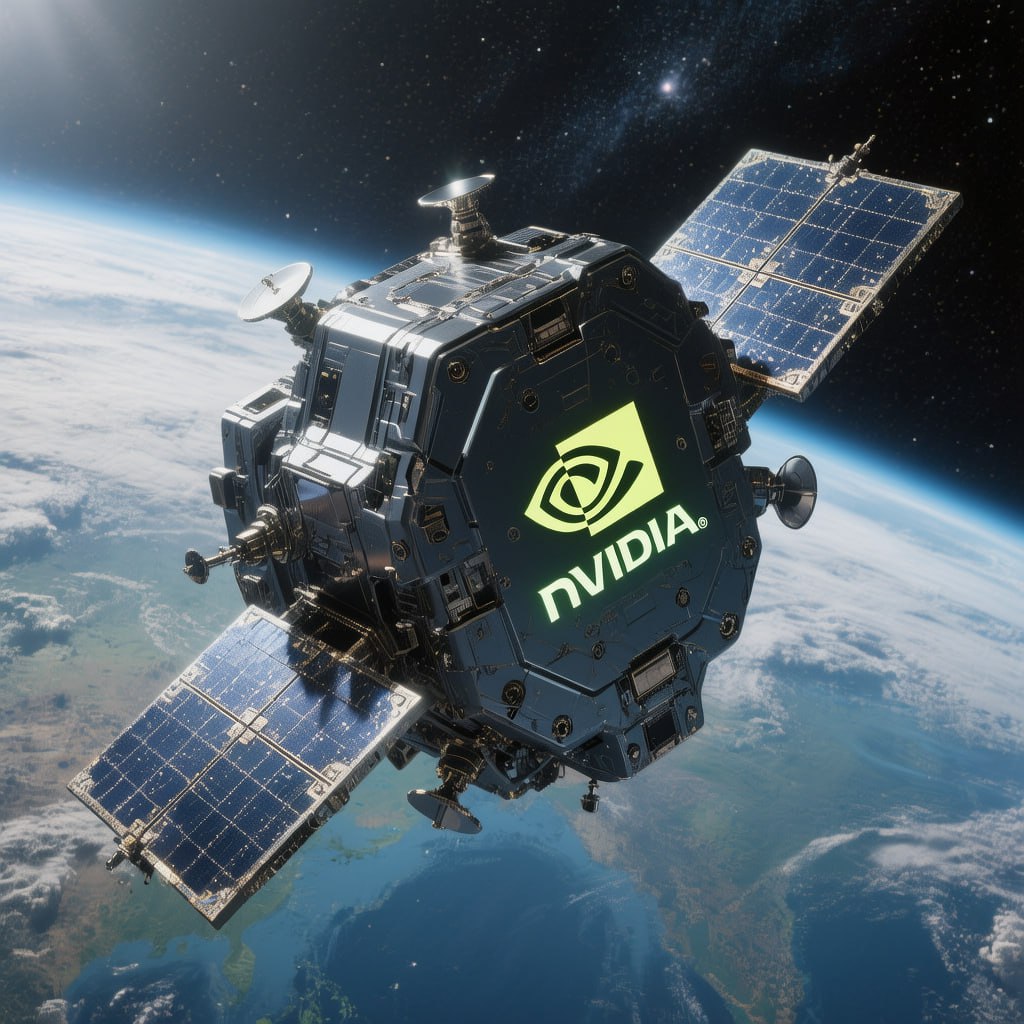
You know where data centers for AI are now being moved? To space. Startup Starcloud, participant in NVIDIA Inception program, plans to launch in November a satellite with AI into Earth orbit. And this is only the beginning of their ambitious plan to solve problems of energy consumption and cooling of data centers on Earth.
Philip Johnston, co-founder and CEO of the startup, explains: in space you get almost unlimited renewable energy at low cost.
The Starcloud-1 satellite weighing 60 kg, the size of a small refrigerator, is expected to offer 100 times more powerful GPU computing than any previous space operation.
Starcloud’s space data centers can use the vacuum of deep space as an infinite heat sink. And radiating waste heat into space through infrared radiation can save significant water resources on Earth. Constant sun exposure in orbit also means almost infinite solar energy. No batteries or backup power needed.
According to Starcloud’s forecasts, energy costs in space will be 10 times cheaper than ground-based options, even accounting for launch costs.
Starcloud plans to build an orbital data center with 5 gigawatts of power with oversized solar panels and cooling panels. About 4 km wide and long. There’s your future of computing infrastructure – not on Earth, but above it.
Autor: AIvengo
For 5 years I have been working with machine learning and artificial intelligence. And this field never ceases to amaze, inspire and interest me.
Latest News
UBTech will send Walker S2 robots to serve on China's border for $37 millionChinese company UBTech won a contract for $37 million. And will send humanoid robots Walker S2 to serve on China's border with Vietnam. South China Morning Post reports that the robots will interact with tourists and staff, perform logistics operations, inspect cargo and patrol the area. And characteristically — they can independently change their battery.
AI chatbots generate content that exacerbates eating disordersA joint study by Stanford University and the Center for Democracy and Technology showed a disturbing picture. Chatbots with artificial intelligence pose a serious risk to people with eating disorders. Scientists warn that neural networks hand out harmful advice about diets. They suggest ways to hide the disorder and generate "inspiring weight loss content" that worsens the problem.
OpenAGI released the Lux model that overtakes Google and OpenAIStartup OpenAGI released the Lux model for computer control and claims this is a breakthrough. According to benchmarks, the model overtakes analogues from Google, OpenAI and Anthropic by a whole generation. Moreover, it works faster. About 1 second per step instead of 3 seconds for competitors. And 10 times cheaper in cost per processing 1 token.