UBTech will send Walker S2 robots to serve on China’s border for $37 million
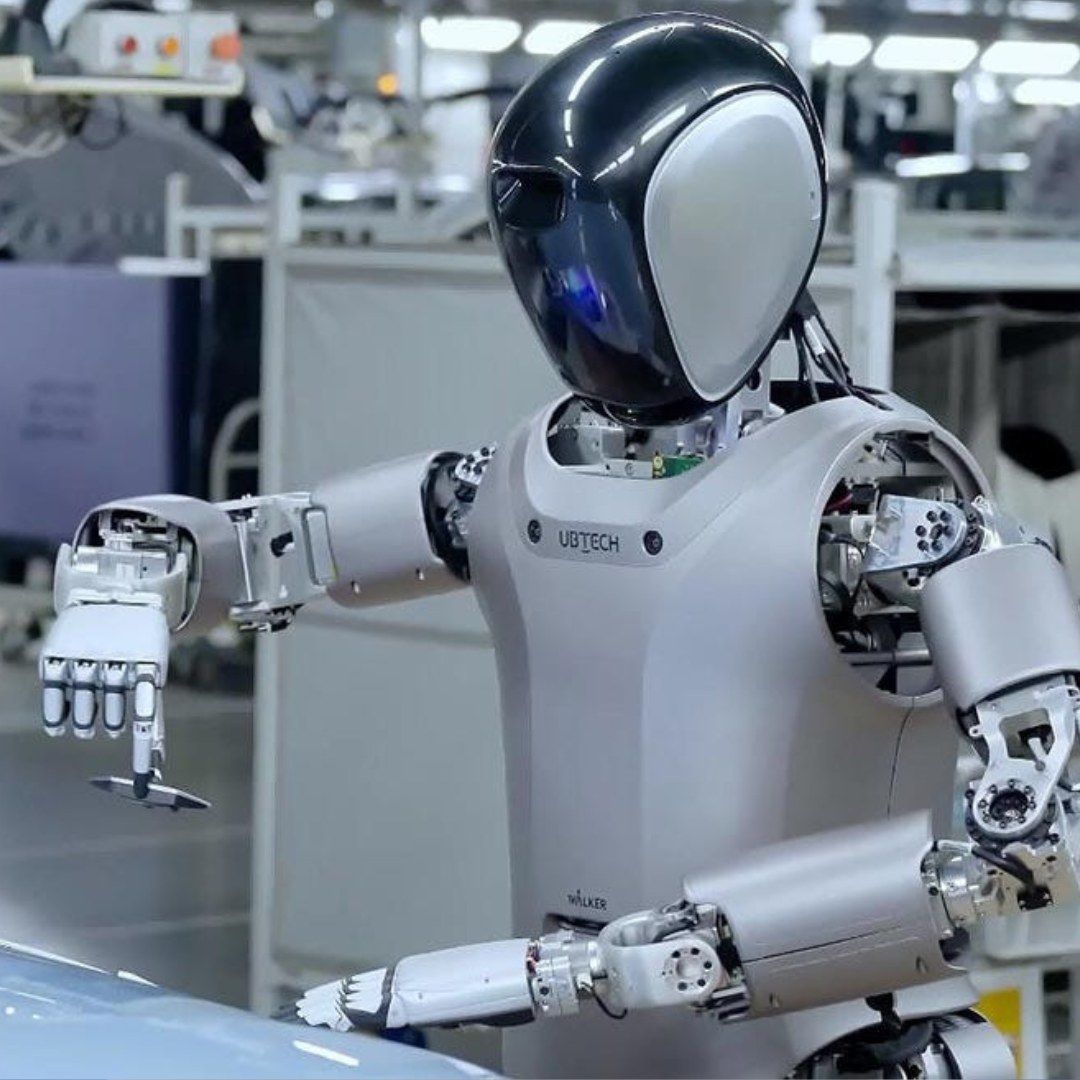
Chinese company UBTech won a contract for $37 million. And will send humanoid robots Walker S2 to serve on China’s border with Vietnam. South China Morning Post reports that the robots will interact with tourists and staff, perform logistics operations, inspect cargo and patrol the area. And characteristically — they can independently change their battery.
And now the scale of ambitions. UBTech promised to ship 500 humanoid robots to clients by the end of this year. And by the end of next year increase this number by 10 times. And a year later double it to 10 thousand units. Serial deliveries of Walker S2 will begin in December.
But border service — this is only the beginning. Chinese police are already using robots for patrolling streets in Shenzhen, Shanghai and Chengdu. In Shenzhen, humanoid robots work at customs for cargo processing and document analysis. Using large language models from DeepSeek. And robots with voice interface in several languages interact with tourists.
It turns out, UBTech stands out among many manufacturers of humanoid robots in China not only with ambitions. But also with real successes in practical application. Its robotic products already work at manufacturing enterprises in China. And now are entering government service.

Autor: AIvengo
For 5 years I have been working with machine learning and artificial intelligence. And this field never ceases to amaze, inspire and interest me.
Latest News
UBTech will send Walker S2 robots to serve on China's border for $37 millionChinese company UBTech won a contract for $37 million. And will send humanoid robots Walker S2 to serve on China's border with Vietnam. South China Morning Post reports that the robots will interact with tourists and staff, perform logistics operations, inspect cargo and patrol the area. And characteristically — they can independently change their battery.
AI chatbots generate content that exacerbates eating disordersA joint study by Stanford University and the Center for Democracy and Technology showed a disturbing picture. Chatbots with artificial intelligence pose a serious risk to people with eating disorders. Scientists warn that neural networks hand out harmful advice about diets. They suggest ways to hide the disorder and generate "inspiring weight loss content" that worsens the problem.
OpenAGI released the Lux model that overtakes Google and OpenAIStartup OpenAGI released the Lux model for computer control and claims this is a breakthrough. According to benchmarks, the model overtakes analogues from Google, OpenAI and Anthropic by a whole generation. Moreover, it works faster. About 1 second per step instead of 3 seconds for competitors. And 10 times cheaper in cost per processing 1 token.